Key Takeaways
-
ACOG endorses prenatal massage as safe during uncomplicated pregnancies, but always inform your therapist early and disclose your full health history to ensure proper positioning and pressure adjustments.
-
Side-lying with supportive pillows is the gold standard position for prenatal massage, replacing stomach-lying and avoiding extended back-lying to prevent discomfort and maintain safety throughout pregnancy.
-
No strong evidence supports waiting until the second trimester; first-trimester massage can be safe with OB/midwife approval, though some clinics use conservative policies—discuss concerns with both your doctor and therapist.
-
Avoid deep tissue pressure on legs during pregnancy due to blood clot risks; gentle-to-moderate pressure is safe for most healthy pregnancies and can help relieve swelling and heaviness in the third trimester.
-
Choose a therapist with specific prenatal training, not just general massage certification, and ask about their positioning techniques, first-trimester policy, and pressure adjustments before booking your appointment.
-
Benefits include reduced stress, improved sleep, and relief from back/hip pain, but prenatal massage supports comfort—it doesn't treat complications, prevent complications, or induce labor.
Congratulations, mama! Whether you’re growing your first little bean or your third, pregnancy comes with a whole new list of aches you never expected. Sore lower back, swollen ankles, tight shoulders from all that new posture — it’s a lot for your body to handle. So it makes total sense that you’re wondering: is prenatal massage safe during pregnancy, and how is it even different from the regular massage you used to book on your lunch break?
We hear this question all the time here in Falls Church, and we love answering it. The short answer? For most people with an uncomplicated pregnancy, prenatal massage from a properly trained therapist is generally considered safe and can feel like a warm hug for your tired, hardworking body. But there’s more to the story, and we want you to feel fully confident before you book. Let’s walk through exactly how prenatal massage compares to regular massage, what the research actually says, and how to know if you’re a good candidate.

Prenatal Massage vs. Regular Massage: The Real Differences
At first glance, a massage is a massage, right? Not quite. While both use similar hands-on techniques, prenatal massage is adapted specifically for your changing body. Think of it less like a totally different service and more like your favorite recipe with a few smart substitutions.
Here’s a simple breakdown of what changes when you’re expecting:
| Feature | Regular Massage | Prenatal Massage |
|---|---|---|
| Positioning | Face-down on a flat table | Side-lying with pillows, or semi-reclined support |
| Pressure Level | Can range from light to very deep | Gentler, especially on the legs |
| Therapist Training | General massage certification | Specific training in pregnancy positioning and safety |
| Health Screening | Standard intake form | Detailed questions about pregnancy symptoms and complications |
| Goal | Relaxation or pain relief | Comfort, stress relief, and support for pregnancy-related discomfort |
The biggest difference really comes down to positioning and pressure. A well-trained therapist knows how to support your belly and hips with pillows so you’re comfortable, and they know which pressure points to avoid or approach gently, especially around the legs.

So, Is Prenatal Massage Safe During Pregnancy?
According to the American College of Obstetricians and Gynecologists (ACOG), massage can be used during pregnancy, and they recommend telling your therapist you’re pregnant even before it’s visible. That’s reassuring news for anyone feeling nervous about booking their first session.
Here’s what generally makes prenatal massage safe for most expecting moms:
- You have an uncomplicated, low-risk pregnancy
- Your therapist is trained specifically in prenatal massage techniques
- You disclose your full health history and any pregnancy symptoms
- Your positioning is adjusted for comfort, usually side-lying with support
- Pressure is adapted to your comfort level, especially on sensitive areas
That said, safety isn’t a one-size-fits-all answer. It really depends on your individual health, your pregnancy symptoms, and how experienced your therapist is. That’s exactly why our team at Prenatal Massage takes time to ask thoughtful questions before every session.
What About the First Trimester?
This is probably the question we get asked the most, and honestly, the answer is a little more nuanced than most people expect. There is no universal, evidence-based rule that says you must wait until the second trimester to get a massage.
Some clinics choose to wait until after 12 weeks as a conservative policy, often more about liability comfort than actual proven risk. In fact, a 2023 review of massage therapy practices found that just over 25% of surveyed therapists offering prenatal treatments agreed massage should be avoided in the first trimester, showing that even professionals don’t fully agree on this point.
Here’s what we suggest if you’re in your first trimester and craving some relief:
- Talk to your OB or midwife about your specific pregnancy and any concerns they might have
- Ask your massage therapist about their first-trimester policy before booking
- Be upfront about any bleeding, cramping, or high-risk factors
- Choose a therapist trained in prenatal care, not just general massage
- Listen to your body and speak up if anything feels off during the session
Every pregnancy is different, and your comfort matters most. There’s no shame in waiting a bit longer if it makes you feel more at ease.
Best Positioning for a Safe Prenatal Massage
One of the biggest safety upgrades in prenatal massage is how you’re positioned on the table. As your belly grows, lying flat on your stomach just isn’t going to happen, and lying flat on your back for too long later in pregnancy can sometimes cause dizziness or discomfort.
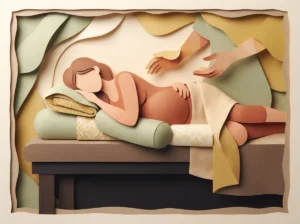
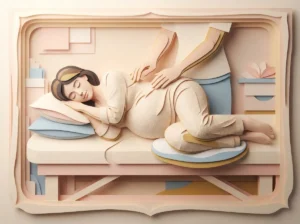
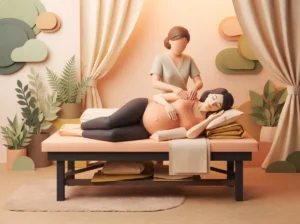
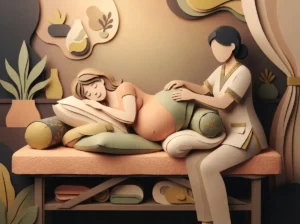
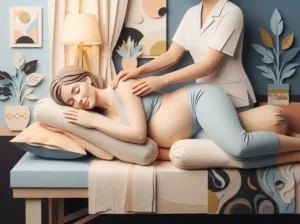
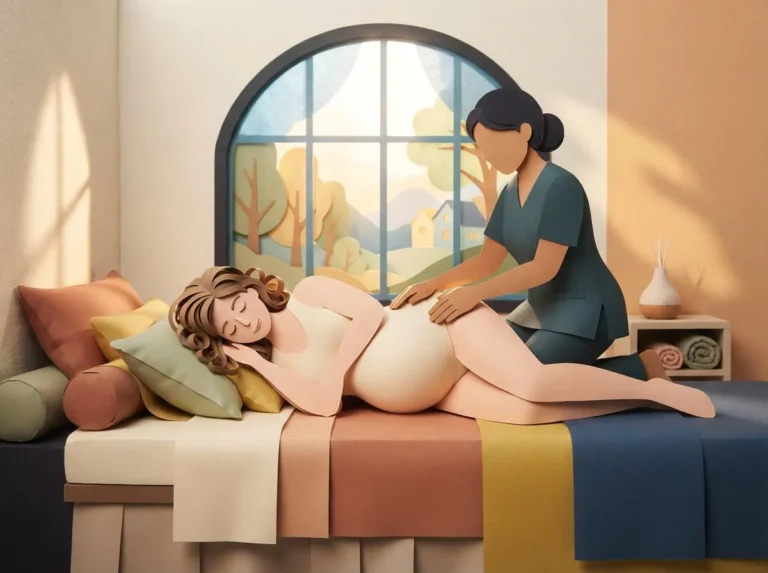
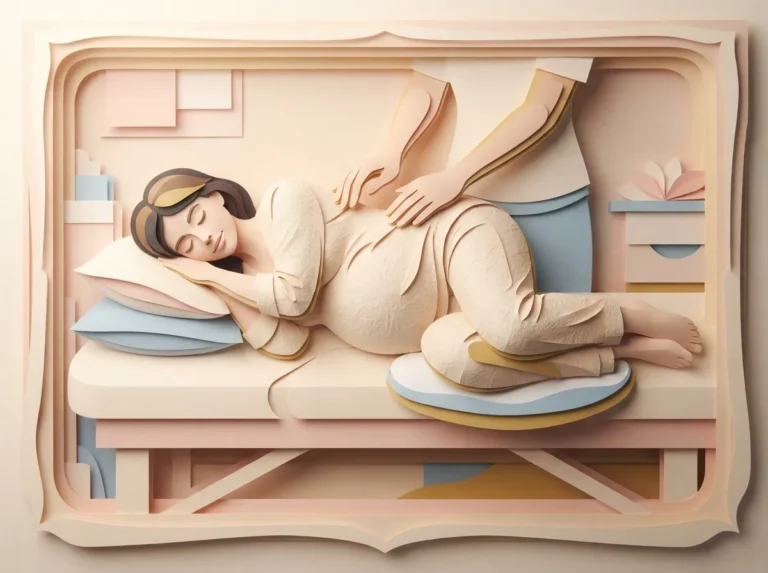
That’s why side-lying is the go-to position recommended by ACOG. Your therapist will typically use supportive pillows under your belly, between your knees, and behind your back to keep you cozy and well-aligned throughout the session. Some studios use specialty tables with belly cutouts, but side-lying remains the gold standard for comfort and safety.
When You Should Check With Your Doctor First
While prenatal massage is safe for the vast majority of pregnant clients, there are some situations where it’s smart to get the green light from your OB or midwife first. This isn’t meant to scare you, just to keep you and your baby as safe as possible.
You should check in with your doctor before booking if you’re experiencing:
- Preeclampsia or pregnancy-related high blood pressure
- Unexplained bleeding or spotting
- Preterm contractions or a history of preterm labor
- Placental complications
- Clotting disorders or suspected deep vein thrombosis (DVT)
This list isn’t exhaustive, so if you’re ever unsure, it never hurts to ask. Your OB knows your pregnancy best and can help you make the right call for your situation.
Can Deep Tissue or Leg Massage Cause Problems?
This is a great question, and one worth taking seriously. Deep, intense pressure — especially on the legs — should generally be avoided during pregnancy when there’s any concern about blood clot risk. If you have a suspected or diagnosed DVT, massage is not appropriate and needs medical evaluation instead.
For most healthy pregnancies, though, gentle to moderate pressure on the legs is perfectly fine and can even help with that achy, heavy feeling so many moms describe in the third trimester. If you’re someone who normally loves a firm Deep Tissue Massage, just know your prenatal session will feel noticeably gentler, and that’s a good thing for your growing baby.
What Are the Benefits of Prenatal Massage?
Beyond just feeling nice (and let’s be honest, that matters too), prenatal massage offers some genuinely helpful benefits for expecting moms. Research suggests it may help with:
- Reduced stress and anxiety levels
- Improved sleep quality
- Relief from lower back and hip pain
- Decreased swelling in the legs and feet
- An overall sense of relaxation and connection to your body
It’s worth being clear, though: prenatal massage is meant to support comfort, not to treat pregnancy complications or induce labor. The current evidence is limited, and no study has shown that massage prevents obstetric complications or improves birth outcomes. It’s simply a wonderful tool for feeling better day to day.
Choosing a Qualified Prenatal Massage Therapist
Not all massage therapists have specialized prenatal training, so it’s worth asking a few questions before you book. A qualified therapist should be properly licensed and have real experience with pregnancy-safe positioning and techniques.
Before your appointment, feel free to ask:
- Are you specifically trained in prenatal massage?
- How do you position clients during different trimesters?
- What is your policy on first-trimester massage?
- How do you adjust pressure for pregnant clients?
- What should I tell you about my health history?
At our studio, we love walking new and expecting moms through exactly what to expect. If you’re curious about our approach, feel free to explore our About page or check out real client experiences on our Reviews page.
What to Tell Your Therapist Before Your Session
Being upfront with your therapist helps them keep you safe and comfortable. Before your massage begins, plan to share:
- How far along you are
- Any pregnancy complications or high-risk factors
- Areas of pain or discomfort you’re experiencing
- Any swelling, dizziness, or unusual symptoms
- Your comfort level with pressure and touch
This conversation only takes a few minutes but makes a huge difference in how your session is tailored to you.
Pairing Prenatal Massage With Other Wellness Treatments
Many expecting moms love combining their prenatal massage with gentle add-ons for extra relaxation. Our free Aromatherapy Massage option uses calming, pregnancy-safe scents to enhance your session without any extra cost. Some clients also explore Reiki Healing as a gentle, hands-off way to ease stress and support emotional balance during pregnancy. Reiki, a Japanese energy healing practice, focuses on restoring your body’s natural life force rather than physical manipulation, making it a lovely complement for moms who want relaxation without any pressure at all. You can learn more about the practice’s roots through this overview of Reiki Healing.
Why Falls Church Moms Trust Luna Massage Studio
Pregnancy is demanding enough without wondering if your massage therapist really knows what they’re doing. At Luna Massage Studio, our team understands the unique needs of expecting moms right here in Falls Church, VA, and we take real pride in creating a safe, supportive space for you to relax.
Curious what other clients are saying? You can follow our latest updates on Instagram or read honest reviews from real clients on Yelp. And if you’d like to see what our community has shared, feel free to visit us on Google — Luna Massage Studio for even more feedback from moms just like you.
Final Thoughts on Prenatal Massage Safety
So, is prenatal massage safe during pregnancy? For most moms with a healthy, uncomplicated pregnancy, the answer is yes, especially when you choose a therapist trained specifically in pregnancy care. The key is open communication, proper positioning, and listening to your body every step of the way.
You deserve to feel supported, comfortable, and cared for during this incredible chapter of your life. If you’re ready to experience gentle, expert prenatal care designed just for you, go ahead and Book Now for your next session, or Contact our friendly team with any questions. We can’t wait to help you feel your best, mama.
FAQs
Q: Is prenatal massage safe during pregnancy?
A: Yes, for most people with an uncomplicated pregnancy, prenatal massage from a properly trained therapist is generally considered safe. Just be sure to tell your therapist you’re pregnant and share any symptoms so they can adjust positioning and pressure for you.
Q: Can I get a massage in the first trimester?
A: There’s no solid evidence proving massage causes harm in the first trimester, though some clinics prefer to wait until after 12 weeks as a conservative policy. It’s always a good idea to chat with your OB and your massage therapist so everyone’s on the same page.
Q: What position is safest for a pregnancy massage?
A: Side-lying with supportive pillows is generally the safest and most comfortable position, especially as your belly grows. Your therapist should help you get cozy with pillows under your belly, knees, and back throughout the session.
Q: Can deep tissue or leg massage cause problems during pregnancy?
A: Very deep pressure, particularly on the legs, is usually avoided during pregnancy due to blood clot concerns. If you have any suspected clotting issues, please check with your doctor before booking, since massage isn’t appropriate in that case.
Q: How do I choose a qualified prenatal massage therapist?
A: Look for a therapist with specific training in prenatal positioning and techniques, not just general massage experience. Don’t be shy about asking questions before you book, like how they handle pressure adjustments and what their first-trimester policy looks like.
Our Service Area