Key Takeaways
-
Research shows mixed results: while a 2025 study found 72% stress reduction and 63% pain reduction after one session, major health organizations like NCCIH state there isn't enough high-quality evidence to prove Reiki relieves chronic pain on its own.
-
Reiki works best as a complementary therapy paired with proven techniques like deep tissue massage, physical therapy, or medical treatment—never as a replacement for these established pain-relief methods.
-
Reiki is ideal for stress-related tension, seniors with arthritis, pregnant women seeking gentle relief, and wellness-focused individuals, but effectiveness varies by person and condition.
-
When finding a provider, ask about their certification level, experience with your specific condition, available touch/no-touch options, and verify they don't promise 'cures' but describe it honestly as a relaxation-focused service.
-
A typical Reiki session costs around $125 for 60 minutes and can be combined with add-ons like Gua Sha or cupping; many clients book massage first for physical relief, then add Reiki for a calming reset.
-
Reiki is generally safe for people with chronic conditions like fibromyalgia, arthritis, or neuropathy since it involves no forceful pressure or medication, but always consult your doctor before starting any new pain management approach.
If you’ve been searching “reiki for chronic pain near me,” you’re probably tired. Tired of aching joints, tired of tense shoulders, and maybe tired of trying things that don’t quite work. We get it. Chronic pain is exhausting, and you deserve real answers, not empty promises. So let’s talk honestly about what Reiki can (and can’t) do, how it compares to massage therapy, and how to find a provider near Falls Church, VA who will treat you with care and honesty.
This guide is written for real people: busy professionals whose shoulders live near their ears, pregnant moms dealing with new aches, athletes nursing sore muscles, seniors managing arthritis, and wellness lovers who want every tool in the self-care toolbox. Wherever you fall on that list, we’ll help you understand Reiki, its evidence, and how it might fit into your pain-relief routine alongside proven techniques like deep tissue massage.

What Is Reiki, Really?
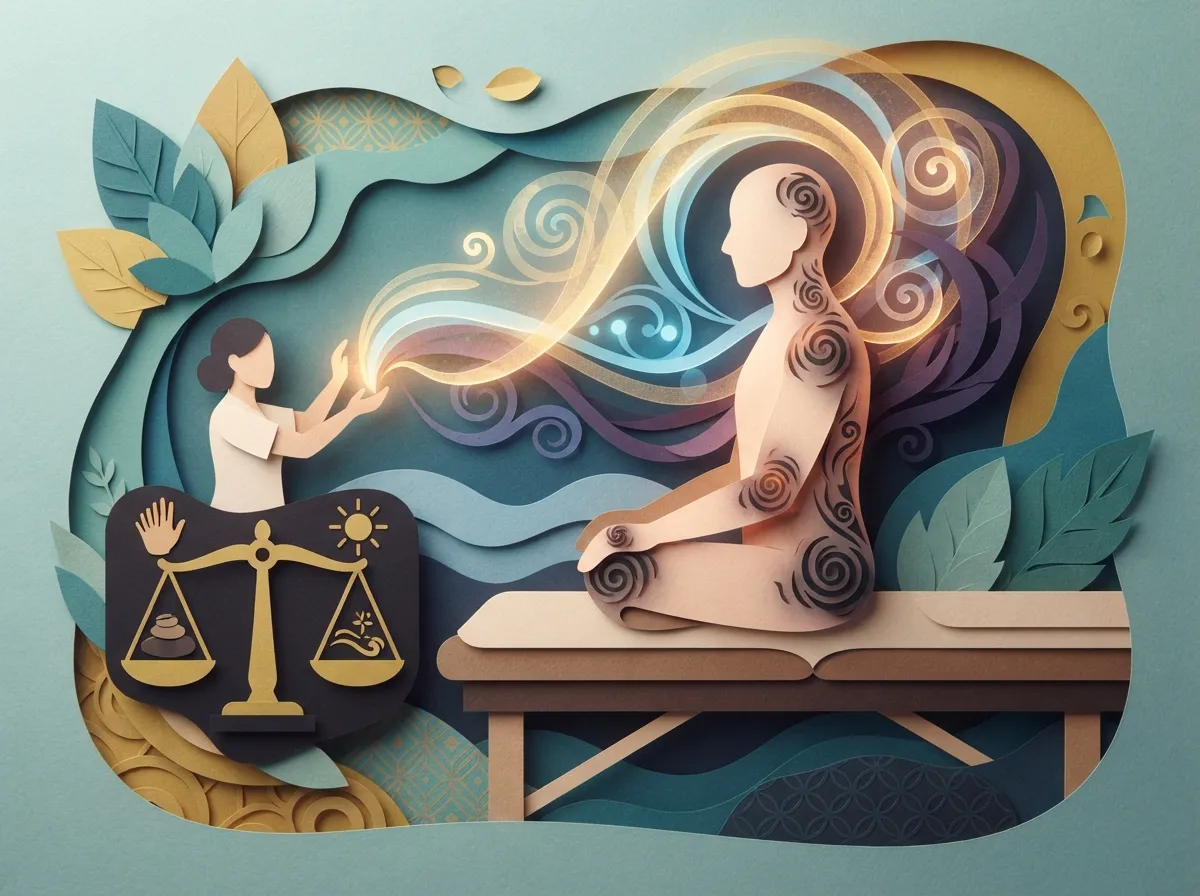
Reiki is a gentle, hands-on (or hands-just-above) practice that started in Japan in the late 1800s. A practitioner lightly rests their hands on or near your body. The idea is to support relaxation and your body’s own sense of balance. Think of it as a quiet, calming experience rather than a deep muscle treatment.
In a massage studio setting, Reiki is usually offered as a peaceful add-on to your wellness routine. It’s not a medical treatment. It won’t replace your doctor, physical therapist, or medication. But it can be a soothing part of your self-care plan, especially when paired with therapies like aromatherapy massage or Swedish massage.
You can learn more about the philosophy behind this practice on Reiki Healing, which explains its origins and how it spread worldwide.
Does Reiki Actually Help with Chronic Pain?
Let’s be honest, because you deserve honesty. The research on Reiki and pain is mixed. Some studies show hints of promise. Others show no real effect at all.
Here’s what the science currently says:
- The National Center for Complementary and Integrative Health (NCCIH) states there isn’t enough high-quality research to prove Reiki relieves chronic pain.
- An NCCIH-funded study on fibromyalgia found Reiki didn’t improve pain, daily functioning, medication use, or doctor visits.
- A 2018 meta-analysis looked at four small studies with 212 total people. It found a notable drop in reported pain scores after Reiki sessions. But with so few studies, this result is more “interesting lead” than “proven fact.”
- A newer 2025 study found that people felt less stressed and less achy after just one 10-minute Reiki session. Stress dropped by about 72%, and perceived pain dropped by about 63%. These are self-reported feelings, though, not measurable medical outcomes.
So what does this mean for you? Reiki might help you feel calmer and more comfortable. But it shouldn’t replace medical care, physical therapy, or proven pain-relief massage techniques.
Reiki vs. Massage Therapy: A Side-by-Side Look
Since you’re comparing options, let’s break it down clearly. Here’s how Reiki stacks up against traditional massage therapy for chronic pain support.
| Feature | Reiki Healing | Massage Therapy (Deep Tissue/Swedish) |
|---|---|---|
| Touch Involved | Light touch or hands hovering above body | Direct pressure on muscles and tissue |
| Best For | Relaxation, stress reduction, emotional calm | Muscle tension, stiffness, physical pain relief |
| Scientific Evidence | Limited, inconsistent | Well-documented for muscle and pain relief |
| Session Length | Typically 60 minutes | 60, 75, or 90 minutes |
| Good Companion For | Anxiety, poor sleep, general tension | Arthritis, back pain, sports injuries, fibromyalgia |
Many clients at Luna Massage Studio actually combine the two. They book a massage for the physical relief, then add Reiki for the calming, whole-body reset. If you want to dig deeper into how these two therapies compare, check out our full breakdown: Reiki vs. Massage: Which Session Fits You Better?
Who Might Benefit Most from Trying Reiki?
Reiki isn’t a one-size-fits-all fix, but it may bring comfort to certain groups more than others.
Busy Professionals Dealing with Stress-Related Tension
If your neck feels like a rock by Friday, stress is likely part of the problem. Chronic pain and stress often feed off each other. Reiki’s calming approach may help lower that tension, especially when paired with an evening deep tissue massage session.
Seniors Managing Arthritis or Stiffness
Older adults often deal with joint pain that flares with stress or poor sleep. While Reiki alone hasn’t been proven to fix arthritis pain, its gentle nature makes it a low-risk way to relax the nervous system. It pairs well with therapeutic touch work.
Wellness-Focused Individuals Building a Self-Care Routine
If you already prioritize sleep, nutrition, and mindfulness, Reiki might feel like a natural addition. Many wellness enthusiasts enjoy it as part of a broader plan that includes massage, Gua Sha, or cupping.
Pregnant Women Seeking Gentle Relief
Pregnancy brings new aches, and not every technique is safe during this time. Reiki’s non-invasive nature makes it a gentle option, though prenatal massage remains the gold standard for physical relief. Learn more about safe options in our prenatal massage guide.
What Happens During a Reiki Session?
If you’ve never tried it, here’s what to expect, step by step.
- You’ll lie down fully clothed on a comfortable table, much like a massage session.
- The practitioner will explain their approach and ask about your comfort with touch.
- They’ll place their hands lightly on or just above different areas of your body.
- You’ll simply relax and breathe. Many people feel warmth, tingling, or deep calm.
- The session usually lasts about an hour, followed by a few minutes to talk about how you feel.
If touch makes you uncomfortable, that’s okay. Ask for a no-touch version, where the practitioner keeps their hands slightly above your body the entire time. A good provider will always respect your comfort level and get your consent first.
Is Reiki Safe for People with Chronic Conditions?
Generally speaking, yes. Reiki involves no forceful pressure, no medication, and no needles. That makes it low-risk for most people, including those managing fibromyalgia, arthritis, neuropathy, or migraines.
That said, it should never replace medical evaluation for new, severe, or worsening pain. Always loop in your doctor first, especially if your symptoms change. Think of Reiki as a supporting player, not the star of your pain-management team.
How to Find a Qualified Reiki Provider Near You
Searching “reiki for chronic pain near me” can bring up a lot of options. Here’s how to narrow it down.
- Ask about training. Reiki practitioners typically complete different levels of certification. Ask what level your practitioner has reached.
- Check reviews. Look at real client feedback, like the reviews on our Luna Massage Studio reviews page or through platforms like Yelp.
- Ask about experience with your condition. Some practitioners have worked more with fibromyalgia clients, others with sports injuries or prenatal clients.
- Confirm session details. Ask about length, cost, and whether touch or no-touch is available.
- Look for transparency. A trustworthy provider will never promise a “cure.” They’ll describe Reiki as a relaxation-focused complementary service.
You can also follow local studios on social platforms to see real client experiences and behind-the-scenes moments. Our Instagram page shares updates on services, tips, and studio life in Falls Church.
What Does Reiki Cost Near Falls Church, VA?
Pricing varies by studio, but here’s a general idea of what to expect locally.
| Service | Typical Price |
|---|---|
| Reiki Healing (60 min) | $125 flat rate |
| Deep Tissue or Swedish Massage (60 min) | $125 |
| Add-On: Gua Sha (15 min) | $35 |
| Add-On: Cupping (15 min) | $35 |
At Luna Massage Studio, Reiki Healing is offered at a flat rate of $125, making it easy to plan your visit without surprise costs. You can also pair it with add-ons like Gua Sha or cupping to target specific tension spots.
Combining Reiki with Proven Pain-Relief Techniques
Since Reiki’s pain-relief evidence is still limited, many people get the best results by combining it with therapies backed by stronger research. Here are a few pairings worth exploring:
- Reiki + Deep Tissue Massage for muscle tension and joint stiffness.
- Reiki + Sport Massage for athletes managing training soreness. Learn more in our sport massage guide.
- Reiki + Prenatal Massage for expectant moms wanting gentle, full-body relief.
- Reiki + Gua Sha or Cupping for deeper tension release in specific areas.
This kind of combined approach lets you enjoy Reiki’s calming benefits while still getting the physical relief that comes from hands-on massage work.
Questions to Ask Before Booking
Before you book your first session, it helps to ask a few simple questions.
- What is your Reiki training and certification level?
- Do you offer touch and no-touch options?
- Have you worked with clients who have my specific condition?
- What should I expect to feel during and after the session?
- Can this be combined with massage therapy in the same visit?
A good studio will answer these questions clearly and kindly, without pressure or big promises.
Your Next Step Toward Feeling Better
Chronic pain deserves a thoughtful, well-rounded approach. Reiki can be a gentle, relaxing piece of that puzzle, especially when paired with therapies that have stronger evidence behind them, like massage therapy. You don’t have to choose just one path. You can build a routine that fits your body, your schedule, and your comfort level.
If you’re near Falls Church, VA and ready to explore Reiki, massage, or a combination of both, our team would love to help you find the right fit. See what real clients say by checking out Visit us on Google — Luna Massage Studio, and when you’re ready, book your session today to start feeling more relaxed, balanced, and cared for.
FAQs
Q: Can Reiki help with chronic pain?
A: Reiki may help you feel more relaxed and less stressed, which can sometimes ease how pain feels. But current research doesn’t clearly prove it reduces chronic pain on its own, so it’s best used alongside proven treatments like massage therapy or medical care.
Q: Is Reiki scientifically proven to relieve pain?
A: Not quite yet! Some small studies show promising short-term results, but major health organizations like NCCIH say there isn’t enough strong evidence to call it proven. Think of it as a gentle, low-risk option rather than a guaranteed fix.
Q: What happens during a Reiki session for chronic pain?
A: You’ll lie comfortably, fully clothed, while a practitioner places their hands lightly on or just above your body. Most people find it deeply relaxing, and sessions typically last around an hour.
Q: Should Reiki be used instead of massage therapy or medical treatment?
A: Nope, and we’d never recommend that! Reiki works best as a calming addition to your routine, not a replacement for massage therapy, physical therapy, or medical care. Many of our clients enjoy combining Reiki with deep tissue massage for the best of both worlds.
Q: How do I find a qualified Reiki practitioner near me?
A: Look for someone with clear training credentials, positive client reviews, and honest communication about what Reiki can and can’t do. Local studios, like ours in Falls Church, VA, are happy to answer your questions before you book.
Our Service Area