
Key Takeaways
-
There is no one-size-fits-all massage schedule; ideal frequency depends on your goal, symptom severity, how your body responds, health history, and a therapist's in-person assessment.
-
For chronic neck pain, a 2024 trial found 60-minute sessions (2-3 times weekly) helped more than 30-minute sessions, but early gains did not always last at 12 or 26 weeks.
-
For ongoing pain, use a short, time-limited series with agreed goals, then check progress at each visit and adjust, space out, or stop visits as needed.
-
Book when tension starts building rather than waiting for severe pain, since earlier visits tend to feel gentler and often need less work to ease.
-
Pause every few sessions to ask whether pain is lower, sleep and movement have improved, and benefits last longer, so you don't book indefinitely on autopilot.
-
Choose a schedule you can realistically keep within your budget and calendar, since a visit every three weeks you enjoy beats a weekly plan you often cancel.
It happens at the end of almost every session. You sit up, feel loose and calm, and then the big question pops out: “This was amazing… and how often should I come?” It’s a great question, and honestly, it’s one we love hearing at Luna Massage Studio.
Here’s the honest answer. There is no single schedule that works for everyone. Research does not point to one perfect frequency for all people or all conditions. What works for a runner with tight hamstrings is not what works for a new mom or a busy executive.
The good news? You can avoid the most common mistakes people make when they pick a massage schedule. In this guide, we’ll walk through eight of them, show you what the research actually says, and help you build a plan that fits your goals, your body, and your budget. Let’s get you feeling your best!
Why There Is No One-Size-Fits-All Massage Schedule
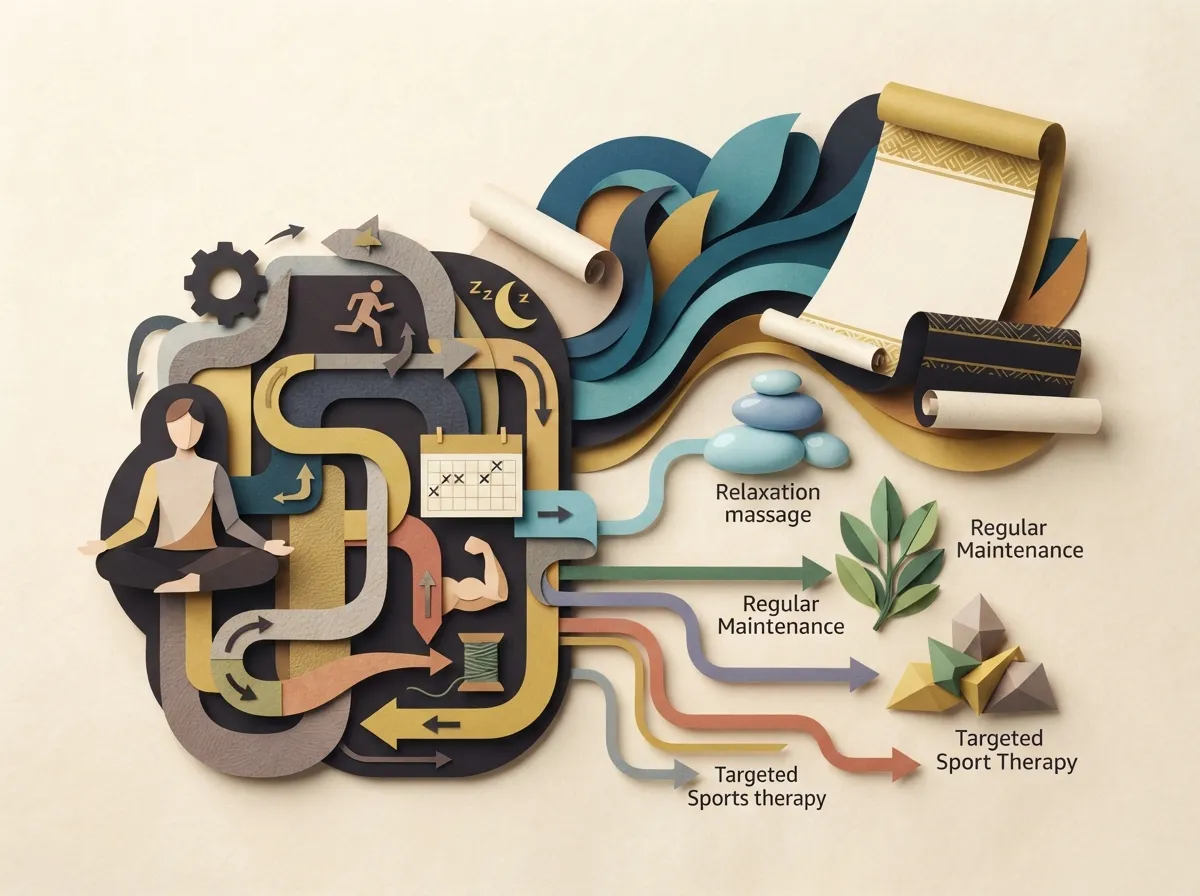
Many people expect a simple rule like “every two weeks.” But your ideal frequency depends on several things:
- Your reason for massage: relaxation, a specific pain, training recovery, or pregnancy comfort
- Symptom severity: mild tightness versus ongoing pain
- How your body responds: some people feel better for days, others for hours
- Your health history: injuries, medications, and conditions all matter
- Your therapist’s assessment: an in-person check tells us far more than a chart can
A 2024 evidence-map review of massage research from 2018 to 2023 found that study schedules ranged from a single session to one visit every three weeks. In other words, even researchers are still working out what is best. That’s why a personal plan beats a generic rule every time.

Mistake 1: Assuming a Fixed Schedule Fits Everyone
The biggest mistake is copying what your friend or coworker does. Your friend may book weekly because it fits her stress level and budget. That doesn’t mean it’s right for you.
For general relaxation or occasional muscle tension, booking as needed or on a loose rhythm is perfectly fine. A regular schedule is a personal choice, not a medical requirement. Start with how you feel, not with a rule.
Mistake 2: Waiting Until You Are in Serious Pain
Many busy professionals wait until their shoulders feel like concrete. Then they book one session and hope for a miracle. Tension that builds for months often needs more than one visit to ease.
If you notice tightness creeping in, that’s a good time to book. Earlier visits can feel gentler and easier on your body. You may also enjoy our guide on why muscle tension keeps coming back after massage.
Mistake 3: Expecting One Session to Fix a Long-Term Problem
One massage can feel wonderful. But if you’ve had neck or back pain for months or years, one visit is rarely the whole story. A short, planned series is often more useful.
For a specific pain concern, try this approach:
- Share your goals and pain history with your therapist.
- Agree on a short, time-limited plan, such as a few sessions over several weeks.
- Check in on your progress at each visit.
- Adjust the plan, space visits out, or stop if you’re not seeing benefit.
This keeps your plan focused instead of open-ended. For more on pain, see how to find neck pain relief with massage therapy.
What the Research Says About Frequency
Let’s look at one well-known study. Researchers followed 228 people with chronic nonspecific neck pain. They compared five massage schedules over four weeks against a wait-list group. The schedules included 30-minute and 60-minute sessions, one to three times each week.
| Schedule Tested | Result vs. Wait-List Group |
|---|---|
| 30-minute sessions, 2 or 3 times weekly | No significant improvement in pain or neck function |
| 60-minute sessions, 2 times weekly | More likely to see meaningful improvement (relative risk 3.41 for neck function, 2.30 for pain) |
| 60-minute sessions, 3 times weekly | More likely to see meaningful improvement (relative risk 4.98 for neck function, 2.73 for pain) |
That sounds exciting, but here’s the important part. These are short-term results for chronic neck pain only. They do not prove that this schedule works for other conditions or for everyone.
A follow-up trial also found no differences between the original groups at 12 or 26 weeks. So early gains don’t always last, and ongoing sessions are not always needed. That’s a helpful reminder to check in and reassess rather than keep booking on autopilot.
Mistake 4: Choosing 30-Minute Sessions for a Big Problem
In that neck pain trial, the shorter 30-minute sessions did not outperform the wait-list group. The longer 60-minute sessions did. That doesn’t mean everyone needs a long session. But if you’re dealing with a stubborn problem, a short visit may not give your therapist enough time to work.
At Luna Massage Studio, our deep tissue, Swedish, sport, and prenatal massages start at 60 minutes, with 75 and 90-minute options for larger areas or full-body work. A longer session gives us time to warm up the tissue and address more than one spot.
Mistake 5: Booking Indefinitely Without Checking Progress
Some people sign up for a standing weekly slot and never ask whether it’s still helping. Evidence does not support indefinite maintenance for every condition. A good habit is to pause every few sessions and ask:
- Is my pain lower than when I started?
- Am I sleeping better or moving more easily?
- Do the benefits last longer between visits?
- Would spacing out my visits still feel good?
If the answers are yes, great! If not, talk with your therapist. We may change the technique, the length, or the timing. In some cases, we may suggest checking in with your doctor too.
A Friendly Frequency Guide by Goal
While no schedule is perfect for everyone, these starting points can help you plan a conversation with your therapist. Think of them as ideas, not rules.
| Your Goal | A Common Starting Approach | Best Fit |
|---|---|---|
| General relaxation and stress | As needed, or on a rhythm that feels good, such as monthly | Swedish or aromatherapy add-on |
| Busy-professional tension | Regular visits during stressful seasons, then space out | Swedish or deep tissue |
| Training and recovery | Around heavy training blocks or events | Sport massage |
| Pregnancy discomfort | Planned with your therapist and care provider | Prenatal massage |
| Chronic stiffness or pain | A short, time-limited series with reassessment | Deep tissue or therapeutic work |
Mistake 6: Ignoring Your Own Lifestyle and Budget
The best schedule is the one you can actually keep. A plan that stresses your wallet or calendar defeats the purpose. A massage every three weeks that you truly enjoy beats a weekly plan you cancel half the time.
If you work long hours, ask about evening or weekend openings. If budget is tight, a shorter series followed by spaced-out visits may fit better. Our guide on affordable massage mistakes has more ideas.
Tips for Specific Groups
For Busy Professionals
Stress tends to come in waves. During deadline season, you may want closer visits. When things calm down, you can stretch the time between sessions. Use massage as a reset button, not just a reward.
For Pregnant Women
Pregnancy changes quickly, so your needs may shift from month to month. Talk with your doctor or midwife first, and share any complications with your therapist. Learn more in our guide on how to plan your prenatal massage schedule safely.
For Athletes and Active Adults
Time your massages around your training. Many athletes like a session during a heavy training block or a few days after a big event. Avoid a very deep session right before a race, since you may feel sore. See our overview of sports massage therapy for more.
For Seniors with Chronic Pain
Gentle, steady care often works well. Consistent visits, paired with your doctor’s advice, can help with stiffness and flexibility. Always mention arthritis, medications, and mobility concerns before your session. Our page on chronic pain massage explains what to expect.
Mistake 7: Skipping the Conversation About Your Health
Massage is generally considered low risk when a trained practitioner provides it. But your therapist needs to know about your health to keep you safe. Before every new series, share:
- Medical conditions and current medications
- Recent injuries or surgeries
- Pregnancy, even early on
- Areas you do not want touched
Your therapist may adapt the session, wait, or suggest a medical check first. That’s a sign of good care, not a problem. If you’re unsure about timing, read who should not get a prenatal massage right now.
Mistake 8: Forgetting to Pair Massage With Healthy Habits
Massage works best as part of a bigger picture. Stretching, water, good sleep, and gentle movement help your results last longer between visits. If tension keeps returning, your desk setup, workout routine, or stress level may need attention too.
Some clients also like to add Reiki healing or an add-on like Gua Sha or cupping for extra relief. These can be added to a massage in 15-minute blocks. You can read about cupping therapy to see if it’s a good fit.
How to Tell If Massage Is Helping
Instead of guessing, track a few simple signs after each visit:
- Note your pain or tension level from 1 to 10 before and after.
- Notice how long the relief lasts.
- Watch your sleep, mood, and movement over the next few days.
- Compare how you feel after three or four sessions to how you felt at the start.
Share these notes with your therapist. They help us shape a plan that really works for you.
How Many Sessions Until You Notice a Difference?
Many people feel calmer and looser right after one massage. Lasting change, especially for ongoing pain, often takes more time and a few visits. Because every body is different, there’s no magic number. A good rule is to give a planned series a fair try, then reassess together.
Your Next Step at Luna Massage Studio
So, back to that question: “And how often should I come?” The honest answer is, it depends on you. Start with your goal, keep your plan short and flexible, and check in on your progress along the way. We’d love to help you build that plan at our Falls Church studio. You can also see what other clients say by visiting Luna Massage Studio on Google.
Ready to find your rhythm? Book your session now or contact our team with any questions. We can’t wait to meet you!
FAQs
Q: How often should I get a massage for muscle tension?
A: It depends on how tight you feel and how your body responds. Many people book as needed or on a rhythm that feels good, like monthly. If tension is ongoing, your therapist may suggest a short, planned series and then reassess.
Q: Is it safe to get a massage every week?
A: Massage is generally considered low risk when a trained therapist provides it, and many people enjoy weekly visits. Just share your health history and any soreness so we can adjust pressure and technique. If you’re not sure, check with your doctor first.
Q: How many massage sessions does it take to notice a difference?
A: Many people feel more relaxed right after one session. For ongoing pain, a short series of visits over a few weeks is often more helpful, and your therapist can check progress along the way. Every body responds a little differently.
Q: Should I get massages regularly or only when I feel sore?
A: Both can work, and it’s really a personal choice. Booking before tension builds up can keep you more comfortable, while as-needed visits suit people with lighter goals. We’re happy to help you find a rhythm that fits your life and budget.
Q: When should I ask my doctor before booking a massage?
A: Check with your doctor if you’re pregnant, recovering from surgery or injury, or managing a medical condition or new medication. Always tell your therapist about these things too. We may adapt the session or suggest a medical check first to keep you safe.
Our Service Area