Key Takeaways
-
Side-lying with pillow support is the ACOG-recommended position for prenatal massage, especially as pregnancy progresses, rather than lying on your stomach which can become uncomfortable and put unwanted pressure on your belly.
-
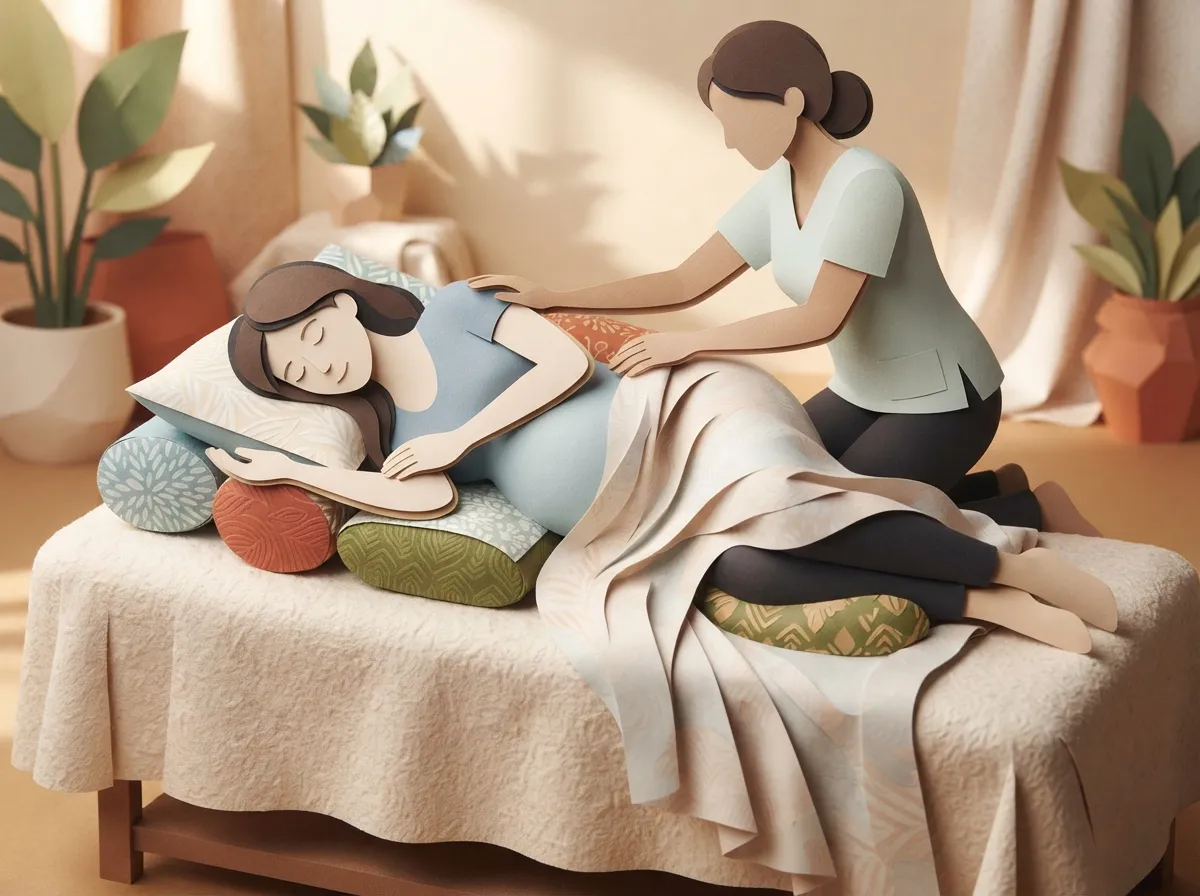
Most therapists set up a supportive 'nest' using pillows under your head, a bolster supporting your belly, pillows between your legs, and arm support to distribute weight and prevent strain on your back and hips.
-
Early pregnancy may allow face-down positioning if comfortable, but there's no specific week when you must switch—comfort and your body's feedback determine positioning, not a fixed timeline.
-
Belly-cutout massage tables are not guaranteed safer or more comfortable than side-lying; ACOG still recommends side-lying as the best position regardless of equipment used.
-
Before your session, tell your therapist your pregnancy stage, health concerns, pain areas, current symptoms like dizziness or nausea, and which positions feel best—this enables personalized, safer treatment.
-
Research shows prenatal massage has minor, short-lived side effects and no evidence of increased miscarriage risk, but positioning should be personal based on your specific pregnancy and trained therapist assessment.
If you’re expecting and booking your first prenatal massage, you’ve probably wondered one thing: do you lie on your stomach during prenatal massage? It’s a fair question! Picture the usual massage table, and you probably see yourself face down. Then you look at your growing belly and think, “How is that going to work?”
Here’s the short answer. Most of the time, no. For most prenatal massages, especially as your pregnancy moves along, you’ll lie on your side with soft pillows hugging your body. Early in pregnancy, some people can lie face down if it feels okay. But comfort is the real rule, not a calendar date.
In this friendly guide, we’ll walk through every position you might use, why side-lying is the go-to choice, what to tell your therapist, and how to feel relaxed and safe from the moment you walk in. Whether you’re a busy professional squeezing in self-care or a mom-to-be who just needs relief, you’re in good hands here.
So, Do You Lie on Your Stomach During Prenatal Massage?
For most prenatal massages, the answer is no. The American College of Obstetricians and Gynecologists (ACOG) names side-lying as the best massage position during pregnancy. That’s the position most trained prenatal therapists rely on, particularly as your belly grows.
That said, there’s no single week when every client must stop lying face down. Early in pregnancy, some people feel perfectly fine on their stomachs. Your therapist should adjust to your body, your stage of pregnancy, and your comfort level on the day.
Think of it this way: your body gives the best feedback. If lying face down feels squished, strained, or just “off,” it’s time to switch. A skilled therapist will make that switch smoothly, with no awkwardness at all.
Why Side-Lying Is the Go-To Position
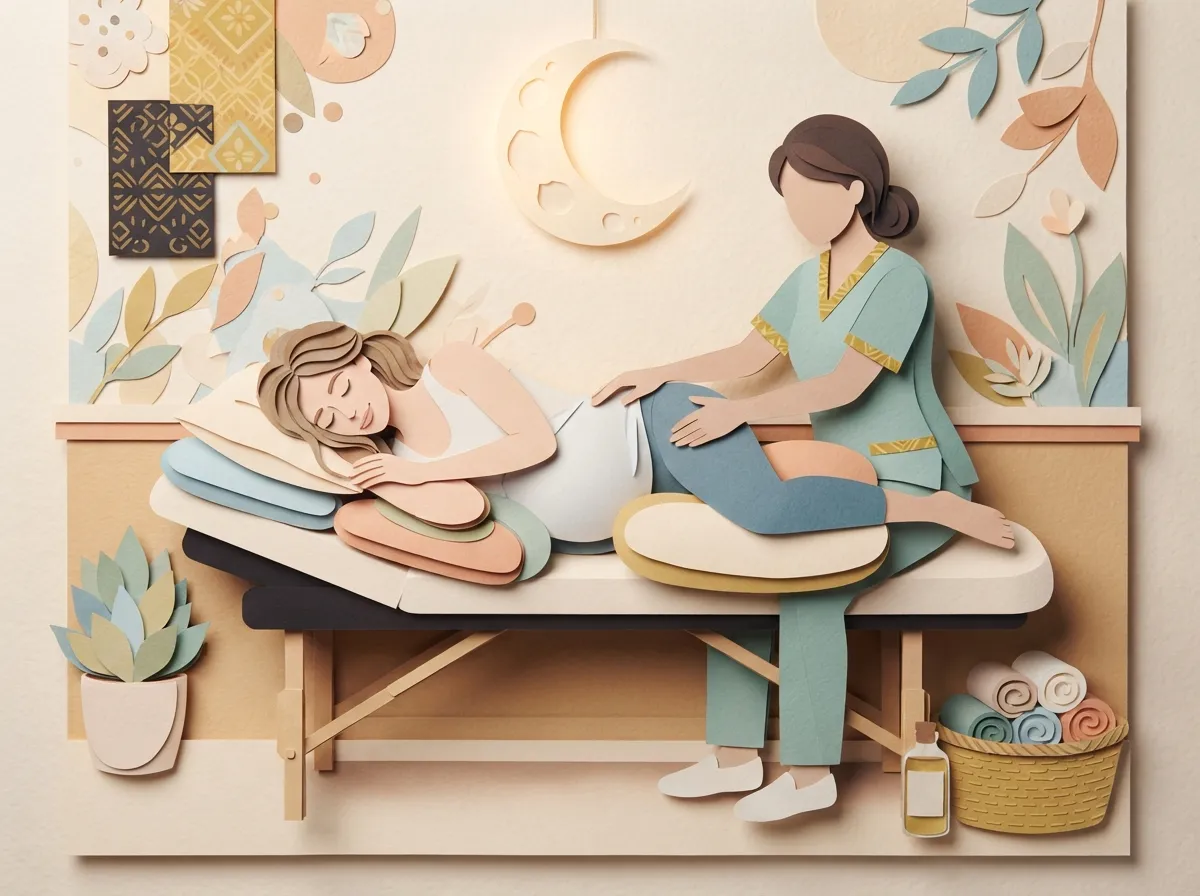
Side-lying has become the standard for good reasons. It keeps pressure off your abdomen. It lets you breathe easily. And it gives your therapist great access to your back, hips, shoulders, and legs, which is where most pregnancy aches live.
Here’s what makes it work so well:
- No pressure on your belly: Your growing baby stays comfortable and unsqueezed.
- Easy breathing: Lying on your side keeps your chest open and relaxed.
- Full support: Pillows and bolsters cradle your body so your muscles can let go.
- Great access: Your therapist can reach tight spots in the low back, hips, and glutes.
If you want a deeper look at how this position feels in a real session, check out our local guide to side-lying prenatal massage.
How Therapists Set You Up Side-Lying
Don’t worry about balancing on your side like a tightrope walker. A good prenatal therapist builds a cozy “nest” around you. Here’s how it usually goes:
- You settle in: You lie on your left or right side, whichever feels best.
- Pillows go under your head: This keeps your neck in a neutral, relaxed line.
- A bolster supports your belly: This takes the weight off your back and hips.
- Pillows go between your legs: This lines up your hips and eases pelvic strain.
- Your arm rests on a pillow: Your shoulder can soften instead of holding tension.
- You switch sides halfway: That way both sides of your body get attention.
Your therapist will check in often. If anything feels too tight, too warm, or just not right, speak up. Adjusting a pillow takes five seconds, and it can change the whole session.
Can You Lie on Your Stomach in the First Trimester?
Many people ask this one, and it’s a good question. In early pregnancy, your belly is still small. Some clients find that lying face down feels fine. If it’s comfortable for you, a prone position may be possible.
But there’s a catch. Early pregnancy can come with tender breasts, nausea, and fatigue. Lying flat on your stomach might feel uncomfortable even when your belly isn’t showing yet. Many therapists simply start side-lying from the very first visit, so you don’t have to guess.
If you’re curious about timing, our article on whether prenatal massage is safe in the first trimester covers it in more detail.
When Does Lying on Your Stomach Stop Being Comfortable?
There isn’t one magic week for everyone. Bodies are different, and so are pregnancies. But as your abdomen grows, lying face down can become uncomfortable. It may also put unwanted pressure on your belly.
Here are signs it’s time to skip the stomach position:
- You feel pressure or pinching around your belly.
- Your lower back feels strained when you lie flat.
- Breathing feels harder than usual.
- You simply don’t feel relaxed or safe.
When in doubt, go side-lying. It’s the position that works across the widest range of pregnancies.
What About Tables With a Belly Cutout?
You may have seen massage tables or cushions with an opening for the belly. They exist, and some spas use them. ACOG acknowledges that such tables are out there. Even so, ACOG still points to side-lying, not face-down, as the best position.
So a cutout is not a guarantee of safety or comfort. It’s one tool among many. A hole in the table doesn’t change how a growing belly feels, how your hips line up, or how your back responds. Your therapist’s training and your own comfort matter far more than any piece of equipment.
Can You Lie on Your Back During Prenatal Massage?
This one comes up a lot, too. Lying flat on your back for a long time can cause trouble for some people later in pregnancy. The growing uterus may press on major blood vessels, which can leave you feeling dizzy, short of breath, or nauseated.
Because of that, therapists commonly use side-lying or an inclined position instead. A semi-reclined setup, with the table or pillows raised, can be a nice option for some clients. It depends on your comfort and your therapist’s training.
If you ever feel lightheaded or unwell in any position, tell your therapist right away. They’ll help you shift to a position that feels better.
Position Options at a Glance
Here’s a quick comparison to help you picture each option:
| Position | Best For | Things to Know |
|---|---|---|
| Side-lying with pillows | Most of pregnancy, especially later months | ACOG’s recommended position; widely used by prenatal therapists |
| Face down (prone) | Possibly early pregnancy, if comfortable | Can become uncomfortable as the belly grows; not required |
| Semi-reclined | Clients who feel better slightly upright | Helps avoid lying flat; depends on therapist training |
| Seated | Short work on neck, shoulders, and back | Good option for quick relief or when lying down is tough |
| Flat on back | Usually avoided later in pregnancy | May cause dizziness or shortness of breath for some |
What to Tell Your Massage Therapist Before You Start
A great session starts with a quick, honest chat. Before you get on the table, share a few simple details. This helps your therapist plan the safest, most comfortable session for you.
- How far along you are in your pregnancy
- Any health concerns or complications
- Any areas that hurt, swell, or feel extra sensitive
- Whether you feel dizzy, nauseated, or tired that day
- Which positions feel best (or worst) right now
It also helps to choose a therapist trained in prenatal massage. At Luna Massage Studio, our prenatal massage is designed around your comfort, with supportive positioning and a gentle, caring touch right here in Falls Church, VA.
Do You Need Your Doctor’s Approval First?
For many healthy pregnancies, a prenatal massage with a trained therapist is a common choice. But if your pregnancy is high-risk or you have complications, check with your obstetric clinician first. They know your history best.
Not sure whether you should wait? Our post on who should not get a prenatal massage right now can help you sort through it. And when in doubt, ask your doctor or midwife. They’d much rather you ask than guess.
What Does the Research Say?
Researchers have looked at pregnancy massage, and the picture is encouraging but still growing. A 2021 systematic review included 12 randomized controlled trials of relaxation massage. All participants began treatment at 12 or more weeks of pregnancy. Only two trials reported side effects, and those were minor and short-lived.
A 2023 review of the evidence found that direct clinical trial data is still lacking for some safety questions. It also found no evidence, based on the physiology reviewed, that massage itself raises miscarriage risk. Still, this doesn’t prove safety for every pregnancy or every technique.
The takeaway? Positioning and treatment should be personal. There’s no one-size-fits-all medical rule, which is exactly why a trained, attentive therapist matters so much.
How to Feel Your Best During a Prenatal Massage
A few small habits can make your session even better. Try these tips:
- Arrive a few minutes early: Use the time to breathe, sip water, and settle in.
- Use the restroom first: Your bladder will thank you.
- Wear comfy clothes: They make it easy to relax and move around.
- Speak up about pressure: Pregnancy often calls for lighter, gentler work.
- Ask for what you need: More pillows, a warmer room, or a quick position change are all fair requests.
- Rest afterward: Take a few quiet moments before heading back to your day.
You might also love adding a little extra calm. Our aromatherapy massage option is free to add to any massage on request, so ask your therapist about soothing scents that feel good to you.
Why Prenatal Massage Is Worth It
Pregnancy is a beautiful season, but let’s be honest: it can be tough on your body. Your center of gravity shifts. Your back works overtime. Your hips and legs feel the load, and sleep can be hard to come by.
A prenatal massage gives you a dedicated hour to slow down. Many expectant moms look to it for relief from aches, a calmer mind, and a little restful time. Curious about the full range of perks? Read about the benefits prenatal massage offers mothers-to-be.
And if you’re hoping to ease specific aches, these reads may help too: how to ease pregnancy back pain with prenatal massage and what to expect from prenatal massage positions in 2026.
Prenatal Massage at Luna Massage Studio
At Luna Massage Studio, we know how special this time is. Our prenatal massage sessions are offered at 60, 75, or 90 minutes, at $125, $145, and $165. Your therapist will talk with you first, then set up a supportive position that suits your stage of pregnancy and your comfort.
Want to see what other clients say? Read our client reviews, check us out on Yelp, or visit us on Google — Luna Massage Studio to see our Falls Church, VA location. You can also follow along on Instagram for studio updates and wellness tips.
If you’re also curious about energy work during pregnancy, you can learn how Reiki healing works, or explore our own Reiki Healing service. Just be sure to talk with your doctor about any new therapy while pregnant.
The Bottom Line
So, do you lie on your stomach during prenatal massage? Usually not. Side-lying with plenty of pillow support is the most common and recommended position, especially as your pregnancy grows. Early on, face-down may be possible if it feels good, but it’s never required.
What matters most is that you feel safe, supported, and comfortable. Share your needs, ask questions, and choose a therapist trained in prenatal care. You and your baby deserve that kind of calm.
Ready to feel supported and relaxed? Book your prenatal massage now, or contact our team with any questions. We can’t wait to take care of you.
FAQs
Q: Can you lie on your stomach for a prenatal massage in the first trimester?
A: Possibly, yes! Early in pregnancy, some people find face-down positioning comfortable. But it’s never required, and many therapists simply start side-lying so you can relax without worrying. Go with whatever feels best to you.
Q: What is the safest position for a prenatal massage?
A: ACOG identifies side-lying as the best massage position during pregnancy. Your therapist will use pillows or bolsters under your head, belly, and legs to keep you cozy and supported. It’s gentle on your body and easy on your breathing.
Q: Is a prenatal massage table with a belly hole safe?
A: Some tables do have an opening for the belly, but a cutout isn’t a guarantee of safety or comfort. ACOG still describes side-lying, not face-down, as the best position. Trust your therapist’s training and your own comfort over any piece of equipment.
Q: Can you lie on your back during a prenatal massage?
A: Lying flat on your back for long stretches can cause dizziness or shortness of breath for some people later in pregnancy. That’s because the uterus may press on major blood vessels. Many therapists use side-lying or an inclined position instead, so you stay comfy and steady.
Q: What should I tell my massage therapist before a prenatal massage?
A: Let them know how far along you are and share any health concerns or complications. Mention any pain, swelling, dizziness, or nausea too. If your pregnancy is high-risk, check with your doctor before booking.
Our Service Area