Key Takeaways
-
Massage may give short-term shoulder pain relief compared with no treatment, but research has not shown it beats exercise, physical therapy, or acupuncture.
-
Massage works best as one part of a broader plan that includes movement, posture habits, and medical care when needed.
-
See a doctor before booking massage for pain after a significant injury or fall, sudden severe pain, inability to move your arm, swelling, lasting numbness, or fever.
-
Seek urgent care for shoulder pain accompanied by chest pain, shortness of breath, or pain spreading to the jaw; also get checked if pain worsens or lasts beyond about two weeks.
-
Speak up during a session if you feel sharp, burning, or electric pain; a 'good hurt' is acceptable, but massage should never feel unbearable.
-
Take movement breaks every 30 to 45 minutes when sitting, keep your screen at eye level, and use gentle mobility work like arm circles and wall slides.
If your shoulders feel tight, achy, or stuck, you’re far from alone. Desk work, workouts, carrying a toddler, and plain old stress all land right in the shoulders. The good news? Massage may bring real shoulder pain relief for many people, and it can feel wonderful too.
But let’s keep it honest. Research shows massage can help with short-term comfort, yet it isn’t a cure-all. It works best as one piece of a bigger plan that may include movement, good posture habits, and medical care when needed.
In this guide, we’ll walk through what the research says, which massage styles may help, what to expect in a session, and when to see a doctor first. Whether you’re a busy professional, an active adult, an expecting mom, or a senior managing stiffness, you’ll find helpful tips you can use right away.

Can Massage Really Provide Shoulder Pain Relief?
For some people, yes. Massage may offer short-term shoulder pain relief, especially when compared with no treatment at all.
A 2013 systematic review looked at 12 randomized trials on massage for neck and shoulder pain. Four of those trials focused on shoulder pain. The review found that massage improved pain right after treatment compared with inactive therapies. However, it did not show a clear edge over active treatments like exercise, physical therapy, or acupuncture.
Here’s another example. A small 2003 trial followed 29 people with shoulder pain. Half received six soft-tissue massage sessions, and half waited for treatment. The massage group reported better pain scores, more range of motion, and improved function. Because the study was small and used a waiting-list group, we can’t say it applies to everyone.
So what’s the takeaway? Massage may help you feel better in the short term. It works best alongside other healthy habits, not as a replacement for them.
What the Research Does and Doesn’t Tell Us
- Helpful: Massage may ease pain for a short time compared with doing nothing.
- Not proven: It hasn’t been shown to beat exercise or physical therapy.
- Limited evidence: Studies on shoulder pain are few, often small, and use many different massage styles.
- Function: Pooled results did not show a reliable gain in shoulder function.
That’s why we think of massage as a smart partner to your care plan. It’s a way to calm sore tissue, relax your body, and make movement feel easier.
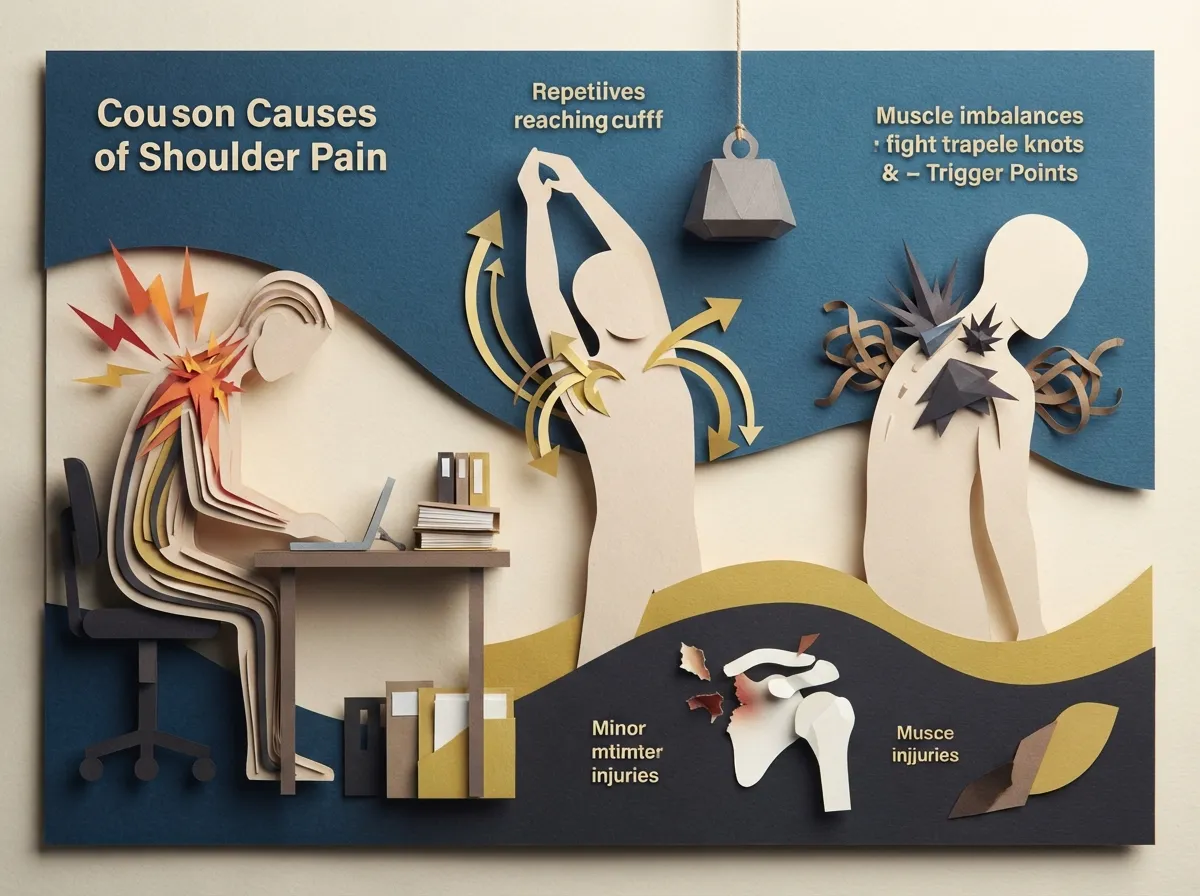
Common Causes of Shoulder Pain
Shoulder pain can come from many places. Knowing the likely cause helps you pick the right next step.
- Muscle tension and overuse. Long hours at a computer, heavy lifting, or repeated overhead movement can leave the upper trapezius and surrounding muscles tight and sore.
- Stress. Many of us carry stress in our shoulders without noticing. Hello, “shoulders up to the ears.”
- Posture habits. Rounded shoulders and a forward head position can strain the neck and shoulder area.
- Sports and training strain. Swimming, lifting, tennis, and climbing can irritate the muscles and tendons around the joint.
- Age-related stiffness. Arthritis and reduced mobility can make shoulders feel achy and tight.
- Pregnancy changes. A growing belly shifts your posture, and extra pressure on the upper back and shoulders is common.
Some causes, like a rotator cuff tear or frozen shoulder, need a medical assessment. Massage may still support comfort in some cases, but it should be guided by a professional who knows your history.
Massage Styles That May Ease Shoulder Pain
Not every massage feels or works the same. Here’s a quick look at the options offered at Luna Massage Studio and who they may suit best.
| Massage Type | Best For | What It Feels Like |
|---|---|---|
| Swedish Massage | General tension, stress, first-timers | Gentle to medium pressure with long, flowing strokes |
| Deep Tissue Massage | Stubborn knots, chronic tightness | Slower, firmer pressure on deeper muscle layers |
| Sport Massage | Active adults, training recovery | Focused work on overused muscles, often with stretching |
| Prenatal Massage | Pregnancy-related upper back and shoulder strain | Gentle, supportive work in comfortable positions |
Swedish Massage for Tension and Stress
If your shoulders feel tight because life is busy, Swedish massage is a lovely place to start. The soothing strokes help your body relax, and many people leave feeling lighter. You can learn more in our guide to Swedish massage and why you’ll love it.
Deep Tissue Massage for Stubborn Knots
When the tightness just won’t quit, deep tissue work targets the deeper layers of muscle. It’s firm, but it should never feel like you have to grit your teeth. Curious if it’s right for you? Check out what deep tissue massage is and how it can help.
Sport Massage for Active Bodies
Runners, lifters, and weekend warriors often overload the shoulders and upper back. Sport massage focuses on the muscles you use most. Our post on sports massage therapy benefits and techniques explains what to expect.
Prenatal Massage for Expecting Moms
As your belly grows, your upper back and shoulders often take the strain. Prenatal massage uses supportive positioning so you stay comfortable and safe. You can read about prenatal massage positions and what to expect before your visit.
Helpful Add-Ons: Gua Sha and Cupping
Some clients like to pair their massage with a 15-minute add-on. Both are offered at Luna Massage Studio and must be added to a massage session.
- Gua Sha: A gentle scraping technique that has been used for thousands of years to ease aches, tight muscles, and stress.
- Cupping: Soft suction applied to a small area of the body, often used for pain, blood flow, and relaxation.
If you’re curious, take a look at Gua Sha massage therapy or what cupping therapy is. Research on these add-ons for shoulder pain is limited, so think of them as optional extras that some people enjoy.
What to Expect at a Shoulder Pain Massage Session
A good session starts with a conversation. Here’s how it usually goes.
- Check-in. Your therapist asks when the pain started, whether you’ve had an injury, what health conditions or medications you have, and what other symptoms you notice.
- Plan. Together you decide on the focus area, pressure level, and massage style.
- Hands-on work. Your therapist uses pressure and positioning you can comfortably tolerate, adjusting as you go.
- Feedback. You speak up if anything feels sharp, too deep, or just not right. Your therapist should stop or change the approach if symptoms get worse.
- Aftercare. You may get tips for gentle stretches, posture, heat, and hydration.
Here’s a rule of thumb: massage can feel intense, but it should never feel unbearable. A “good hurt” is okay. Sharp, burning, or electric pain is a signal to speak up right away.
Want a deeper look at how a visit flows? Our guide on things to know before visiting a massage therapy studio is a great read.
How Often Should You Get a Massage for Shoulder Pain?
There’s no single answer. The right schedule depends on your pain, your goals, and your budget.
- Short-term flare-up: Some people book a few sessions close together, such as weekly for several weeks. The 2003 trial mentioned earlier used six sessions.
- Ongoing stress or desk tension: Many clients settle into a monthly or every-other-week routine.
- Training load: Athletes often schedule around heavy training blocks or events.
Your therapist can help you build a plan, and you can adjust as you notice how your body responds. For more help, see common massage frequency mistakes.
Simple Habits to Support Your Shoulders Between Sessions
Massage feels best when you back it up with small daily habits. Evidence suggests that active approaches like exercise and physical therapy are strong options, so movement matters.
- Take movement breaks. Stand up, roll your shoulders, and stretch every 30 to 45 minutes if you sit a lot.
- Adjust your workspace. Keep your screen at eye level and your elbows supported.
- Try gentle mobility work. Easy arm circles and wall slides can keep joints moving. If you have a diagnosed injury, ask a doctor or physical therapist which moves are safe.
- Use warmth. A warm shower or heating pad can help muscles relax before stretching.
- Manage stress. Slow breathing, walks, and good sleep all help ease the “shoulders up” habit.
- Strengthen smartly. Gradual strengthening for the upper back and shoulders can build resilience over time.
If you’re wondering how massage stacks up against rehab, our article on choosing between massage and physical therapy breaks it down. And for related tension higher up, see neck pain relief with massage therapy.
Shoulder Pain Relief for Different Lifestyles
Busy Professionals
Long meetings and laptop time are tough on the shoulders. An evening or weekend session can help you unwind, and it gives your muscles a break from the “hunch.” Pair it with micro-breaks during the workday for better results.
Pregnant Women
Shoulder and upper back aches are common as your body changes. Prenatal massage can offer comfort and relaxation. Always check with your doctor or midwife first, and tell your therapist how far along you are.
Athletes and Active Adults
Overhead sports and heavy lifting can leave shoulders sore. Sport or deep tissue massage may help with muscle tension and recovery. Remember that mobility and strength work are key partners.
Seniors With Chronic Pain
Stiffness and arthritis can limit how freely you move. Gentle, tailored massage may ease tightness and help you feel more comfortable. Your therapist can adapt pressure and positioning for your needs.
Wellness-Focused Individuals
If self-care is part of your routine, massage fits right in. Some clients like to combine massage with Reiki healing for extra relaxation. Reiki is a calming, energy-based practice, and while many people find it peaceful, it should not replace medical care.
When to Skip Massage and See a Doctor
Safety comes first. Massage isn’t the right first step for every type of shoulder pain. Please get medical help promptly if you notice any of the following:
- Pain after a significant injury or fall
- Sudden, severe pain
- Inability to move your arm
- Visible deformity or marked swelling
- Numbness or pins and needles that won’t go away
- Fever or feeling generally unwell
- Shoulder or arm pain with chest pain, shortness of breath, or pain spreading to the jaw (seek urgent care right away)
NHS guidance also suggests seeking medical advice if shoulder pain is getting worse or hasn’t improved after about two weeks. A therapist should avoid treating unexplained or severe acute pain until a clinician has assessed it.
For a clearer picture of how different types of care fit together, see wellness massage vs. clinical massage.
Rotator Cuff Injuries and Frozen Shoulder: What About Massage?
These are two of the most common questions we hear. The honest answer is that research specific to these conditions is limited. Massage may help some people feel more comfortable by relaxing surrounding muscles, but it isn’t a fix for a torn tendon or a stiff joint capsule.
If you suspect one of these conditions, start with a doctor or physical therapist. Then ask whether massage can fit into your plan. Your massage therapist can work alongside your care team and adjust their approach to protect the area.
How to Find the Right Therapist
Good communication makes all the difference. Look for someone who listens, asks about your history, explains what they’re doing, and respects your comfort level. Our post on choosing a professional massage therapist you trust offers helpful tips.
At Luna Massage Studio in Falls Church, VA, sessions are tailored to you, with 60, 75, and 90-minute options. If you’d like to see what other clients say, you can visit us on Google — Luna Massage Studio or browse our Yelp reviews. You can also follow along on Instagram.
For more background on the evidence, the NHS offers helpful guidance on shoulder pain.
Ready to Feel Lighter?
Shoulder pain can wear you down, but you don’t have to just push through it. Massage may offer comforting short-term relief, and it works even better when paired with movement, good habits, and medical guidance when needed. Listen to your body, speak up during your session, and give yourself permission to rest.
Ready to give your shoulders some care? Book your massage appointment today, or contact our team with any questions. We’d love to help you feel a little lighter.
FAQs
Q: Can massage therapy relieve shoulder pain?
A: It may! Research suggests massage can offer short-term relief for some people, especially compared with no treatment. It hasn’t been shown to beat exercise or physical therapy, so it works best as a helpful add-on to a broader plan.
Q: What type of massage is best for shoulder pain?
A: It depends on what’s causing your discomfort. Swedish is great for stress-related tension, deep tissue targets stubborn knots, sport massage suits active bodies, and prenatal massage supports expecting moms. Your therapist can help you pick the best fit.
Q: Should massage hurt when treating shoulder pain?
A: Some pressure can feel intense, but it should never be unbearable. A little “good hurt” is okay, but sharp, burning, or electric pain means it’s time to speak up so your therapist can adjust.
Q: When should I see a doctor instead of booking a massage?
A: Please seek medical care for pain after a significant injury, sudden severe pain, trouble moving your arm, swelling or deformity, lasting numbness, or fever. Shoulder pain with chest pain, shortness of breath, or jaw pain needs urgent care. Pain that’s worsening or hasn’t improved in about two weeks also deserves a check-up.
Q: Is massage enough, or should I also do exercises?
A: Massage can feel wonderful, but evidence points to active approaches like exercise and physical therapy as strong options too. Pairing massage with gentle movement and good posture habits usually gives you the best shot at lasting comfort.
Our Service Area