Key Takeaways
-
Side-lying is the most recommended prenatal massage position, with pillows under your head, between knees, and around your belly to provide support and relieve low back, hip, and shoulder pain.
-
Lying flat on your back should be avoided after about 20 weeks of pregnancy because the uterus can compress blood vessels and affect circulation; semi-reclined positioning with your upper body raised is the safe alternative.
-
Your therapist should perform a health check before the session, ask about your due date and medical concerns, and conduct regular check-ins to adjust positioning and pressure based on your comfort throughout.
-
Seated and forward-leaning positions are excellent alternatives if reclining feels uncomfortable due to heartburn, breathing changes, or restless legs, and work well for targeting upper back and neck tension.
-
Speak up immediately if you experience dizziness, nausea, sweating, or shortness of breath during massage; your therapist should help you roll onto your side and contact your doctor if symptoms persist.
-
Prone (face-down) positioning becomes impractical as your belly grows and is generally avoided after 12 weeks; always follow your care provider's specific guidance on safe positioning for your pregnancy.
If you are expecting, you may be wondering how a massage table can work with a growing belly. It’s a great question! You can’t just lie flat like you used to, and that’s perfectly okay. Skilled therapists use special setups to keep you safe, supported, and comfortable from start to finish.
So, what positions are used during prenatal massage? The most common ones are side-lying, semi-reclined, and sometimes seated or forward-leaning. Your therapist picks the best one based on how far along you are, how you feel, and any advice from your care provider.
In this guide, we’ll walk through each position in plain, simple terms. You’ll learn why it works, how pillows are used, and what to do if something feels off. Whether you’re a busy professional squeezing in self-care or a first-time mom-to-be, you’ll know just what to expect when you step into the room.

Why Positioning Matters So Much in Prenatal Massage
Pregnancy changes your body fast. Your belly grows, your balance shifts, and your circulation works harder than ever. Good positioning helps your body relax without adding stress to you or your baby.
A trained prenatal therapist keeps three goals in mind:
- Comfort: You should feel supported and at ease, not strained or twisted.
- Circulation: Some positions can affect blood flow later in pregnancy, so the therapist chooses wisely.
- Safety: The belly should never be pressed, and your joints should feel gently supported.
Every pregnancy is different, so there is no one-size-fits-all answer. That’s why a good therapist checks in with you often and adjusts as needed.
Side-Lying Position: The Most Popular Choice
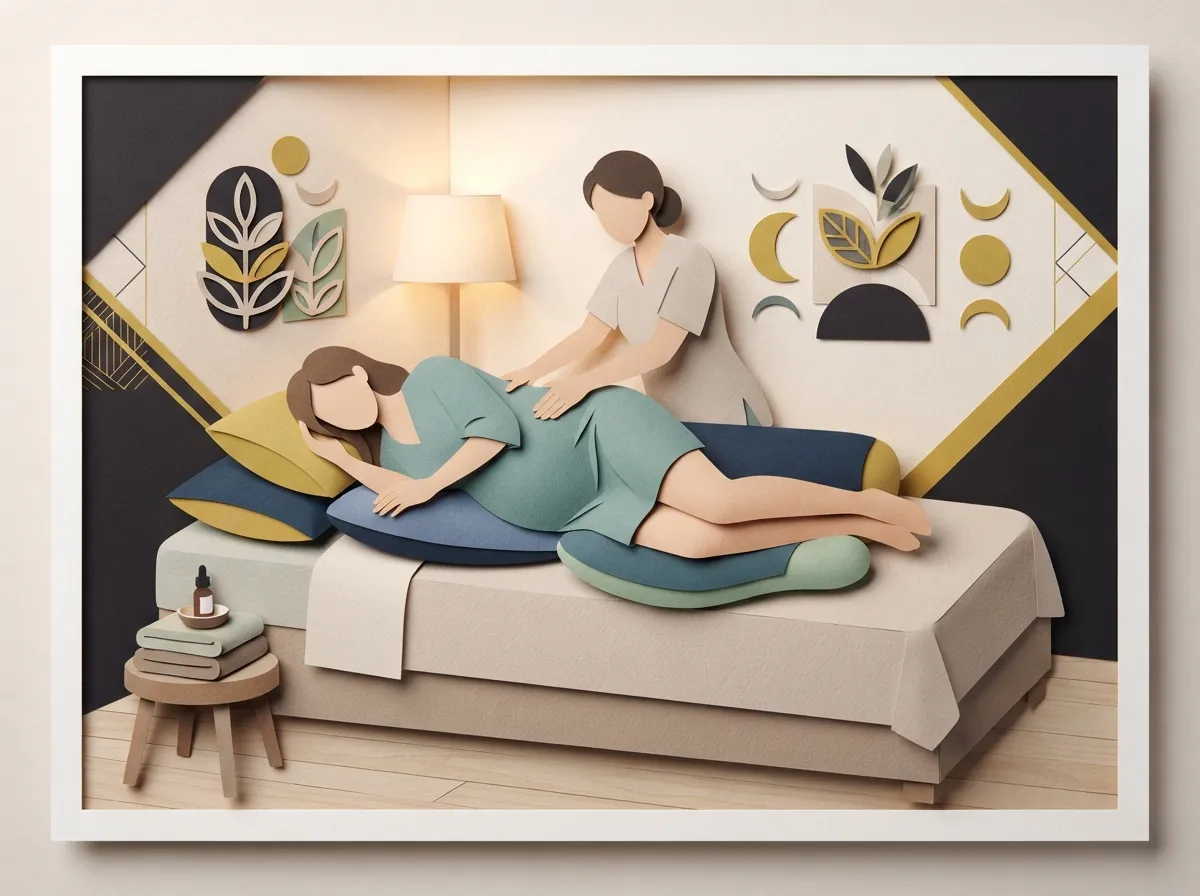
When people ask about prenatal massage positions, side-lying is usually the star of the show. It is widely recommended, especially as pregnancy moves along. It takes pressure off your back and belly, and it gives your therapist great access to your shoulders, back, hips, and legs.
How Side-Lying Works
You lie on your side on the massage table, covered with a sheet or blanket. You can use either side. Many therapists prefer the left side later in pregnancy, or whichever side feels better for your comfort and breathing. You can switch sides during your session too.
How Pillows and Bolsters Are Placed
Support is the secret to a great side-lying massage. Your therapist will usually place:
- A pillow or bolster under your head to keep your neck neutral.
- A pillow between your knees and ankles to ease hip and low back strain.
- A cushion under your belly if you want extra support.
- A pillow or bolster behind or in front of your torso so you can rest without twisting.
The goal is that you feel cradled, like you’re nestled into a cozy nest. If anything feels off, just say so. Your therapist can add, move, or remove pillows in seconds.
Who Benefits Most
Side-lying is a favorite for moms dealing with low back pain, hip pain, and tight shoulders. It’s also a good fit if you struggle to get comfortable at night, because it feels a lot like your usual sleep position. You can learn more about how this setup works in our guide to side-lying prenatal massage.
Semi-Reclined Position: Face-Up Without Lying Flat
Some moms love face-up work, especially for neck, shoulder, arm, and leg massage. The semi-reclined position makes that possible without lying flat on your back.
Here’s how it works. Your therapist raises the upper part of your body using wedges, bolsters, or an adjustable table. Your torso stays elevated, a bit like sitting back in a comfy recliner. Knees are often supported with a bolster, too.
Why not lie completely flat? Later in pregnancy, the weight of the uterus can press on major blood vessels when you lie flat on your back. For some people, that can cause dizziness, nausea, or a faint feeling. Raising your upper body helps avoid that.
Your therapist will adjust the angle and length of time based on how you feel. If you start to feel lightheaded, a good therapist will help you shift right away.
Prone (Face-Down) Position: Is It Used?
This is a common question from expecting moms. Can you lie on your stomach during a pregnancy massage? In most cases, as the belly grows, lying face-down becomes uncomfortable or impractical.
Some sources describe prone positioning as an option very early in pregnancy, but advice varies. For example, MyHealth Alberta suggests avoiding belly-lying after about 12 weeks, and sooner for multiple pregnancies. Other sources give different timelines.
Because guidance is not the same everywhere, a prenatal-trained therapist won’t just assume face-down is okay. They will put your comfort first and follow any advice from your doctor or midwife. At Luna Massage Studio, we focus on supported positions that keep you cozy rather than strained.
Supine (Flat-on-Your-Back) Position: Why It’s Limited
Lying flat on your back for a long time is usually avoided as pregnancy moves along. The growing uterus can compress large blood vessels and affect circulation in some people.
Advice on timing varies. Many sources suggest avoiding long periods of flat back-lying after about 20 weeks. MyHealth Alberta advises avoiding back-lying after the fourth month. Some practitioners suggest changes even earlier.
Because the numbers differ, the best approach is a personal one. Your therapist should ask about your stage of pregnancy, your health, and your doctor’s advice. Then they can choose a position that fits you instead of using one cutoff for everyone.
Seated and Forward-Leaning Positions
Not everyone loves lying down during pregnancy. Heartburn, breathing changes, and restless legs can make reclining tough. That’s where seated and forward-leaning positions come in.
In a seated setup, you sit upright on a chair or the edge of the table. Your therapist can work on your neck, shoulders, upper back, and arms. In a forward-leaning setup, you rest your arms and head on a stack of pillows or a bolster in front of you. This takes pressure off your lower back and gives the therapist good access to your spine and shoulders.
These positions are handy for busy professionals who sit at a desk all day and carry stress in their upper body. They’re also a nice option if you want a shorter, targeted session. Your therapist can switch between seated, side-lying, and semi-reclined positions during one visit to keep you comfortable.
Prenatal Massage Positions at a Glance
| Position | How It Works | Best For | Things to Know |
|---|---|---|---|
| Side-Lying | Lie on your side with pillows under head, between knees, and around belly | Low back, hip, and shoulder pain | Most recommended as pregnancy advances; either side can be used |
| Semi-Reclined | Torso raised with wedges or bolsters, face-up | Neck, arms, legs, and relaxation | Angle and time adjusted to your comfort |
| Seated / Forward-Leaning | Sit upright or rest forward on a bolster | Upper back, neck, and shoulders | Good if reclining feels uncomfortable |
| Prone (Face-Down) | Lying on the stomach | Rarely used | Often impractical as the belly grows; advice varies |
| Supine (Flat on Back) | Lying completely flat, face-up | Usually limited | Prolonged use may affect circulation later in pregnancy |
What Your Therapist Will Do to Keep You Safe
A good prenatal session isn’t only about the position. It’s also about care and communication. Here’s what you can expect from a trained therapist:
- A quick health check: They’ll ask about your due date, any health concerns, and your doctor’s advice.
- Regular check-ins: You’ll be asked about pressure, comfort, and temperature throughout.
- Flexible changes: You can switch positions anytime. Need a bathroom break? Just say so.
- Gentle pressure around the belly: The abdomen is never pressed or twisted.
- Pregnancy-specific training: Therapists should know about safe pressure, positioning, and when to adjust.
If you’re curious about the bigger picture, our post on prenatal massage vs. regular massage explains why a pregnancy-trained therapist matters.
What to Do If You Feel Dizzy or Uncomfortable
Most moms feel relaxed and cared for during a prenatal massage. But if something feels wrong, speak up right away. Signs to watch for include:
- Dizziness or feeling faint
- Nausea
- Sweating
- Shortness of breath
If you feel any of these while reclined, your therapist should stop, help you roll onto your side, and check in with you. Take a few slow breaths and rest until you feel steady. If symptoms don’t settle, contact your doctor or midwife. Your comfort and safety always come first.
Tips for Getting the Most From Your Session
A little preparation goes a long way. Try these simple tips:
- Talk to your provider first. Ask your doctor or midwife if massage is a good fit for your pregnancy. If you’re unsure about timing, read our tips on whether prenatal massage is safe in the first trimester.
- Share your goals. Tell your therapist if you want help with back pain, swelling, stress, or sleep.
- Wear comfy clothes. You will be draped with a sheet, but loose clothing helps you feel relaxed on arrival.
- Eat lightly and drink water. Staying hydrated helps you feel your best.
- Speak up. If a pillow feels wrong or the pressure is too much, say so. There’s no such thing as being too picky!
Who Might Love Prenatal Massage?
Prenatal massage is a wonderful fit for many moms-to-be. Busy professionals in Falls Church often carry stress in the neck and shoulders, and supported seated or side-lying work can melt that away. If sleep is a struggle, a calm side-lying session may help you wind down. Sore hips and lower back are also common complaints that respond well to gentle, supported work. For a closer look at one big benefit, see how prenatal massage can ease pregnancy back pain.
Some medical conditions, like certain high-risk pregnancies, need a doctor’s approval before you book. If you’re not sure, our article on who should not get a prenatal massage right now is a helpful read.
Prenatal Massage at Luna Massage Studio
At Luna Massage Studio in Falls Church, VA, we offer a calm, welcoming space for expecting moms. Our prenatal massage sessions are available in 60, 75, and 90-minute options at $125, $145, and $165. We use supportive positioning, gentle techniques, and plenty of pillows so you can truly unwind.
Want to add a little extra calm? Aromatherapy can be added to any massage at no charge when you ask. Just let us know about any scent sensitivities first, since pregnancy can change how you react to smells.
Curious what other moms think? You can read feedback on our reviews page, check us out on Yelp, or follow along on Instagram. You can also visit us on Google — Luna Massage Studio to see photos and recent reviews from our Falls Church community.
Final Thoughts: Comfort Comes First
So, what positions are used during prenatal massage? Mainly side-lying, semi-reclined, and seated or forward-leaning positions. Prone and flat-on-the-back positions are usually limited or avoided as your pregnancy moves along, though advice varies, so always follow your care provider’s guidance.
The best prenatal therapists listen closely, use plenty of support, and let you steer the session. You deserve to feel calm, safe, and cared for during this special time.
Ready to give your body the break it has earned? Book your prenatal massage with us today, or contact our team with any questions. We would love to welcome you to the studio!
FAQs
Q: What is the safest position for a prenatal massage?
A: Side-lying is the most commonly recommended position, especially as pregnancy moves along. With pillows under your head, between your knees, and around your belly, you stay comfy and supported. Your therapist will adjust things to fit your stage of pregnancy and any advice from your doctor.
Q: Can you lie on your back during a prenatal massage?
A: Lying flat on your back for a long time is usually avoided as pregnancy advances, since it can affect circulation for some moms. Many sources suggest avoiding it after about 20 weeks, though advice varies. A semi-reclined position with your upper body raised is a popular and comfy alternative.
Q: Can you lie on your stomach during a pregnancy massage?
A: As your belly grows, face-down positioning becomes uncomfortable and impractical for most moms. Some sources say it may be an option very early on, but timelines differ. A trained therapist will focus on your comfort and use supported side-lying or semi-reclined positions instead.
Q: Should I lie on my left or right side for pregnancy massage?
A: Either side can be used. Many therapists prefer the left side later in pregnancy, or whichever side feels better for your comfort and breathing. You can also switch sides during your session if you need a change.
Q: What should I do if I feel dizzy during a prenatal massage?
A: Let your therapist know right away. They will stop, help you roll onto your side, and check in on how you feel. Take slow breaths, rest until you feel steady, and call your doctor or midwife if symptoms don’t go away.
Our Service Area