Key Takeaways
-
Consult your doctor before booking if you have a high-risk pregnancy, bleeding, contractions, high blood pressure, or preeclampsia to ensure massage is safe for your specific situation.
-
Avoid deep, forceful pressure especially on the legs due to pregnancy-related blood clot risk; ask your therapist to use gentle, adapted prenatal techniques instead.
-
Skip alcohol, recreational drugs, and heavy meals right before your session; arrive hydrated and eat a light snack 1-2 hours beforehand to maintain stable blood sugar.
-
Reschedule your appointment if you feel sick, feverish, dizzy, severely nauseous, or notice sudden swelling, headaches, or vision changes—these require medical attention first.
-
Communicate openly with your therapist about your pregnancy week, complications, medications, allergies, and heat sensitivity before the session to ensure proper care and positioning.
-
Request side-lying positions with supportive pillows and avoid lying flat on your back or face-down for extended periods, especially as your pregnancy progresses.
Congratulations, mama! You’re growing a tiny human, and your body is working overtime. A prenatal massage can feel like a warm hug for your aching back, tight hips, and swollen feet. But a little prep goes a long way, and many moms-to-be ask the same thing: what should i avoid before a prenatal massage?
The good news is that the list is short and simple. A few smart choices before your visit can help you feel safer, calmer, and more comfortable on the table. Whether you’re a busy professional squeezing in an evening appointment or you’re simply tired and sore, this guide walks you through each step. We’ll cover health checks, food and drink, products, positions, and the warning signs that mean it’s time to wait.
Think of this as a friendly chat before your session. Let’s get you ready to relax.

Why Preparing Matters for Prenatal Massage
Pregnancy changes how your body handles pressure, heat, and position. Your blood volume rises, your joints loosen, and your balance shifts. A good prenatal session works with all of that, not against it.
When you know what to avoid before a prenatal massage, you help your therapist care for you better. You also make it easier to relax, which is the whole point. Many expectant moms visit for relief from pregnancy back pain, poor sleep, and stress. A little planning helps you get those benefits safely.
Quick Answer: What to Avoid Before a Prenatal Massage
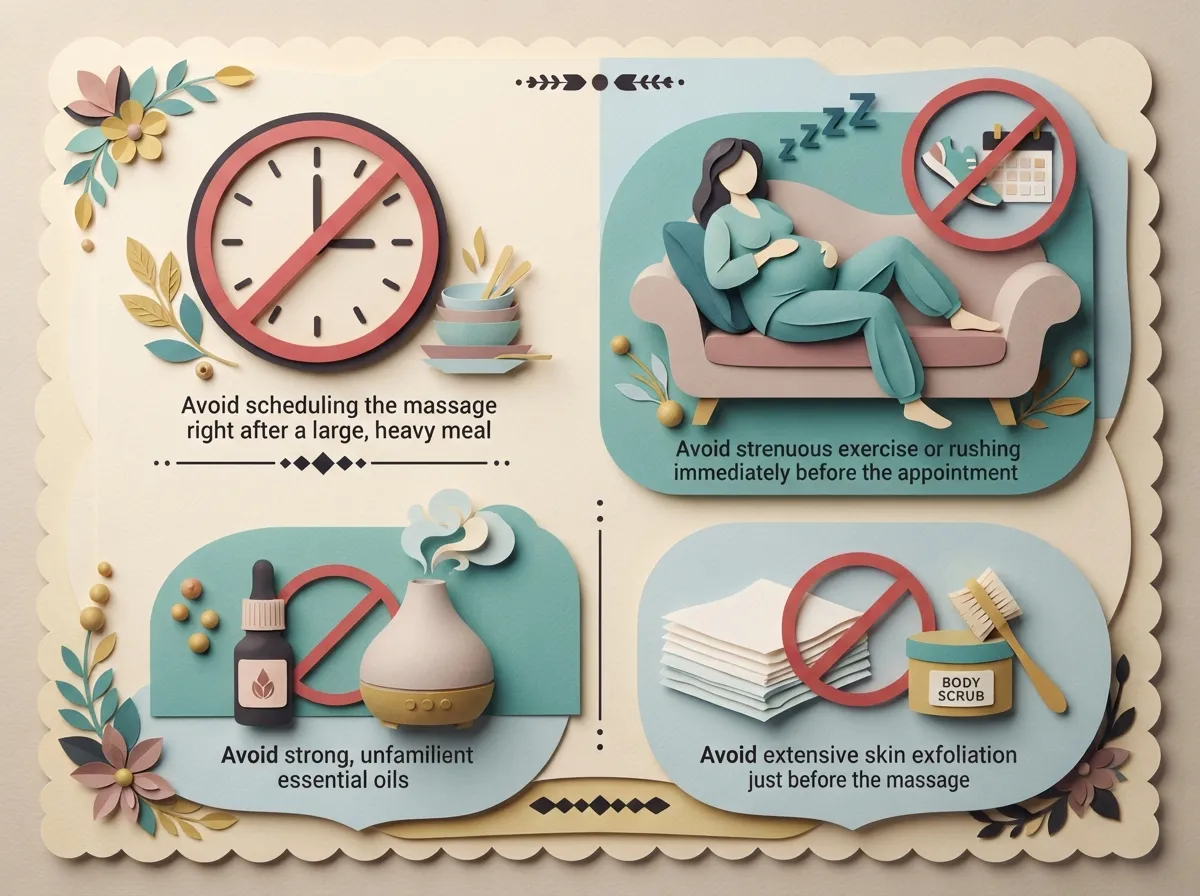
Here’s the short version. Before your session, try to avoid the following:
- Skipping your doctor or midwife if your pregnancy is high-risk or you have worrying symptoms
- Booking when you feel sick, feverish, dizzy, or very nauseated
- Arriving dehydrated, overheated, or right after a heavy meal
- Alcohol or recreational drugs
- Heat-heavy treatments like hot stones
- Asking for deep, forceful pressure, especially on the legs
- Planning to lie flat on your back or stomach for long stretches
- Keeping health details from your therapist
Now let’s walk through each one so you know exactly what to do.
How to Get Ready for Your Prenatal Massage: Step by Step
Follow these steps in order. They take only a few minutes, and they can make your whole visit smoother.
- Check your health and timing. Think about how you feel and where you are in your pregnancy.
- Talk to your provider if needed. Get a quick okay if you have any risk factors.
- Choose a trained therapist. Ask about prenatal experience before you book.
- Plan your food and water. Eat light and stay hydrated.
- Skip the risky extras. Leave out alcohol, heat, and heavy pressure.
- Share everything with your therapist. Honest details keep you safe.
Step 1: Avoid Ignoring Your Health History
Before you book, take a moment to think about your pregnancy. Is it a low-risk pregnancy with no complications? Or have you been told to take extra care?
Check With Your Provider First If You Have Risk Factors
Please don’t skip your obstetrician or midwife if any of these apply to you:
- A high-risk pregnancy
- Bleeding or contractions
- High blood pressure or preeclampsia
- Placenta concerns
- A history of preterm labor
- A clotting disorder or other significant complications
If you have new or unexplained symptoms, postpone your massage until you get medical advice. It’s always okay to wait. Your health and your baby’s health come first.
Not sure who should hold off? Our guide on who should not get a prenatal massage right now goes into more detail.
Don’t Assume the First Trimester Is Off-Limits (or Always Fine)
This one confuses a lot of people. Policies vary. Some therapists and facilities wait until the second trimester, which is around 12 weeks. Many pregnancy providers share that same cautious advice.
Still, available sources do not show that appropriately performed massage causes miscarriage. So the first trimester isn’t a universal ban. The best move is to ask your pregnancy-care provider and your therapist about their approach. You can read more in our post on prenatal massage in the first trimester.
Step 2: Avoid Booking When You Feel Unwell
If you wake up on massage day feeling off, listen to your body. It’s smart to reschedule if you notice any of these:
- Fever or a contagious illness
- Significant nausea or vomiting
- Dizziness or feeling faint
- Unexplained severe pain
Some signs need a call to your pregnancy-care provider, not a massage. These include sudden severe swelling, a bad headache, or vision changes. Please reach out to your doctor or midwife right away if you notice them.
Rescheduling isn’t a failure. It’s good self-care. Your therapist would much rather move your appointment than have you push through feeling sick.
Step 3: Avoid the Wrong Food, Drink, and Substances
What you put in your body before a massage matters. Here’s a simple guide.
| Before Your Session | Do This | Avoid This |
|---|---|---|
| Food | Eat a light snack or small meal | A heavy meal right before lying down |
| Drinks | Sip water and stay hydrated | Arriving dehydrated |
| Alcohol | Skip it completely | Any alcohol before a session |
| Recreational drugs | Skip them completely | Any use before a session |
| Comfort | Tell your therapist if you feel faint or queasy | Staying quiet about nausea or dizziness |
A light meal about an hour or two before your appointment often feels best. It keeps your blood sugar steady without making you feel stuffed on the table. And if you feel woozy at any point, just say so.
Step 4: Avoid Overheating and Irritating Products
Pregnancy can make you run warm. Extra heat is not your friend here.
Skip Hot Stones and Heat-Heavy Treatments
Please don’t plan on a hot-stone treatment or anything else that could overheat you. Let your therapist know if you’re sensitive to heat. A warm, cozy room is lovely. A hot, stuffy one is not.
Ask About Oils and Products
If you have allergies or sensitive skin, speak up before the session starts. Pregnancy can change how your skin reacts. Your therapist can choose a gentle, unscented product if that works better for you.
Curious about scents? At Luna Massage Studio, aromatherapy is a free add-on you can request with any massage. Just mention your pregnancy and any scent sensitivities, and your therapist will help you decide what feels comfortable. You can also explore aromatherapy massage to learn more.
Step 5: Avoid Asking for Deep, Forceful Pressure
It’s tempting to say, “Go harder!” when your back is screaming. But prenatal massage works differently from a regular deep session. Therapists use adapted techniques that are gentle yet effective.
Here’s what to avoid asking for:
- Deep, forceful pressure, especially on the legs
- Abdominal work
- Aggressive stretching that pushes your loose pregnancy joints too far
There’s an important safety reason for the leg caution. Pregnancy raises the chance of blood clots. If you have one-sided swelling, warmth, redness, or unexplained calf pain, a trained therapist will avoid that leg and send you for medical assessment. Don’t try to massage it out yourself.
Not sure how a prenatal session differs from a standard one? Our comparison of prenatal massage vs. regular massage breaks it down.
Step 6: Avoid Lying in Uncomfortable Positions
Position matters a lot as your bump grows. Plan ahead so you’re not surprised on the table.
What Positions to Avoid
- Lying flat on your back for a long time later in pregnancy
- Lying face-down in a way that presses on your belly
What to Ask For Instead
Ask for side-lying or another pregnancy-friendly position, supported by plenty of pillows. A good therapist will tuck pillows under your head, between your knees, and around your belly so you feel cradled. You can learn more about prenatal massage positions and what to expect in 2026.
Wondering about lying on your stomach? Many moms do. Read whether you lie on your stomach during prenatal massage for the full answer.
And remember: speak up if you feel dizzy, short of breath, nauseated, or just uncomfortable. Your therapist can adjust right away.
Step 7: Avoid Skipping the Therapist Conversation
This may be the most important step of all. Before you even book, tell the therapist:
- That you’re pregnant and how many weeks along you are
- Any complications, symptoms, or medications
- Any restrictions from your obstetric clinician
- Allergies, heat sensitivity, or sore spots
Then ask a few questions of your own. Is the therapist trained in prenatal massage? How do they position clients? What’s their first-trimester policy? Not every therapist has prenatal training, so this is worth checking. Our tips on finding a certified prenatal massage therapist can help you ask the right things.
Warning Signs: When to Postpone Your Massage
Here’s a handy checklist. If any of these show up, hold off and call your provider.
| Symptom | What To Do |
|---|---|
| Vaginal bleeding or contractions | Postpone and contact your provider |
| Fever or contagious illness | Reschedule until you’re well |
| Sudden severe swelling, headache, or vision changes | Call your pregnancy-care provider promptly |
| One-sided leg swelling, warmth, redness, or calf pain | Seek medical assessment before any massage |
| Dizziness or severe nausea | Rest and reschedule |
What to Wear and Bring
Comfort is key. Wear loose, easy clothing that you can change in and out of. Your therapist will leave the room while you undress to your comfort level and use draping to keep you covered the whole time.
It also helps to bring a water bottle and arrive a few minutes early. That way you can use the restroom and settle in without rushing. If you’re coming from work, take a few slow breaths in the car. Those little pauses help your body switch into relax mode.
What to Expect at Luna Massage Studio
At Luna Massage Studio in Falls Church, VA, prenatal sessions are built around comfort. Your therapist will ask about your pregnancy, check in on pressure, and use supportive positioning so you can truly unwind. Prenatal massage is offered in 60, 75, and 90 minute sessions, so you can choose the length that fits your day. You can read more on our prenatal massage page.
Want to hear from real clients? See what people say in our reviews, or visit us on Google — Luna Massage Studio to read more feedback from our Falls Church neighbors. We also share updates and wellness tips on Instagram.
A Gentle Word on Safety
This guide shares general information and isn’t medical advice. Every pregnancy is different. Your obstetrician or midwife knows your health best, so follow their guidance first. For extra background on safe pregnancy habits, you can browse trusted resources from the American College of Obstetricians and Gynecologists.
Ready to Relax? Book Your Prenatal Massage
You’ve done the hard part by learning what to avoid before a prenatal massage. Now it’s time to enjoy the reward. With a quick health check, a light snack, plenty of water, and an honest chat with your therapist, you’re set for a calm, comfortable session.
Ready when you are. Book your prenatal massage at Luna Massage Studio today, or get in touch with our team if you have questions first. You and your little one deserve a moment of peace.
FAQs
Q: What should I avoid before a prenatal massage?
A: Skip alcohol, recreational drugs, and a heavy meal right before your visit, and don’t arrive dehydrated or overheated. Also avoid booking if you feel sick, dizzy, or have worrying symptoms. If your pregnancy is high-risk, check with your doctor or midwife first.
Q: Do I need my doctor’s approval before a prenatal massage?
A: Not always, but it’s smart if your pregnancy is high-risk or you have bleeding, contractions, high blood pressure, or a history of preterm labor. When in doubt, ask your obstetrician or midwife. Your therapist will also ask about your health history before starting.
Q: Can I eat or drink before a prenatal massage?
A: Yes! A light snack or small meal and normal hydration usually feel best. Just avoid a heavy meal right before you lie down, and skip alcohol completely. If you feel faint or nauseated during the session, tell your therapist.
Q: Is prenatal massage safe in the first trimester?
A: It depends on the provider and facility. Some therapists wait until the second trimester, but sources don’t show that properly performed massage causes miscarriage. Ask your pregnancy-care provider and your therapist about their policy before booking.
Q: What position will I lie in during a prenatal massage?
A: Most prenatal sessions use side-lying positions with supportive pillows. Lying flat on your back for long stretches later in pregnancy, or lying face-down on your belly, is generally avoided. Tell your therapist right away if any position feels uncomfortable.
Our Service Area