Key Takeaways
-
Deep tissue massage is not about maximum pressure: effective work is layered, starting with a warm-up and sinking deeper only as your muscles allow, with a 'good ache' rather than sharp or burning pain.
-
Speak up immediately if you feel sharp, stabbing, or burning pain, numbness or tingling that spreads, pain that keeps climbing, or any sensation that makes you clench or brace.
-
Ask for specific techniques by goal: sustained pressure for stubborn spots, cross-fiber work for knotted areas, lengthening strokes for general tightness, and anchoring-and-stretching for limited range of motion.
-
Check with a healthcare professional first if you have bleeding or bruising risk, bone fragility, reduced sensation, acute inflammation, significant swelling, or recent trauma or surgery.
-
Research on deep tissue massage is mixed and based on small studies, so it may provide short-term relief but is not a guaranteed cure and does not replace medical care for ongoing pain.
-
Start with one session, notice how you feel over the next two days, then adjust frequency: book more often if you recover well, and back off if you feel overly sore or drained.
You have probably heard friends say, “I need a deep tissue massage,” usually right after a long week at a desk or a hard run. But what actually happens on the table? And does deeper always mean better? Let’s clear it up together.
Here is the surprise. Deep tissue massage is not about the hardest pressure a therapist can give. It is a thoughtful approach that uses slow, controlled pressure to reach tight areas while you stay comfortable. Skilled deep tissue massage techniques are really about patience, listening, and adjusting to your body.
In this guide, we will walk through the main methods therapists use, what a session feels like, who should be careful, and what research says about results. Whether you are a busy professional, a gym-goer, or someone dealing with everyday stiffness, you will leave knowing what to ask for. You can also explore our overview of what deep tissue massage is and how it can help you for more background.

What Is Deep Tissue Massage, Really?
Deep tissue massage is a style of bodywork that aims to work with deeper layers of muscle and connective tissue. It is often chosen for stubborn tension, tight shoulders, and restricted movement. The term sounds specific, but it is actually used loosely.
Research backs that up. A 2017 review titled “Deep tissue massage: What are we talking about?” pointed out that there is no universally accepted definition. Some therapists use the phrase to describe their intention to reach deeper layers. Others mean a particular method. Studies use different techniques, which makes results hard to compare.
So what should you take from that? Think of deep tissue massage as a goal and a toolkit, not one fixed routine. A good therapist chooses tools that fit your body, your goals, and your comfort level on that day.
Deep Tissue Is Not the Same as Maximum Pressure
This is the biggest myth we hear. Many people assume that more pressure equals better results. In practice, forcing pressure can make muscles guard and tighten, which is the opposite of what you want.
Effective deep work is layered. The therapist warms up the surface first, then gradually sinks into deeper tissue as your muscles allow it. You should feel a “good ache” or a sense of release, not sharp or burning pain.
The Core Deep Tissue Massage Techniques Explained
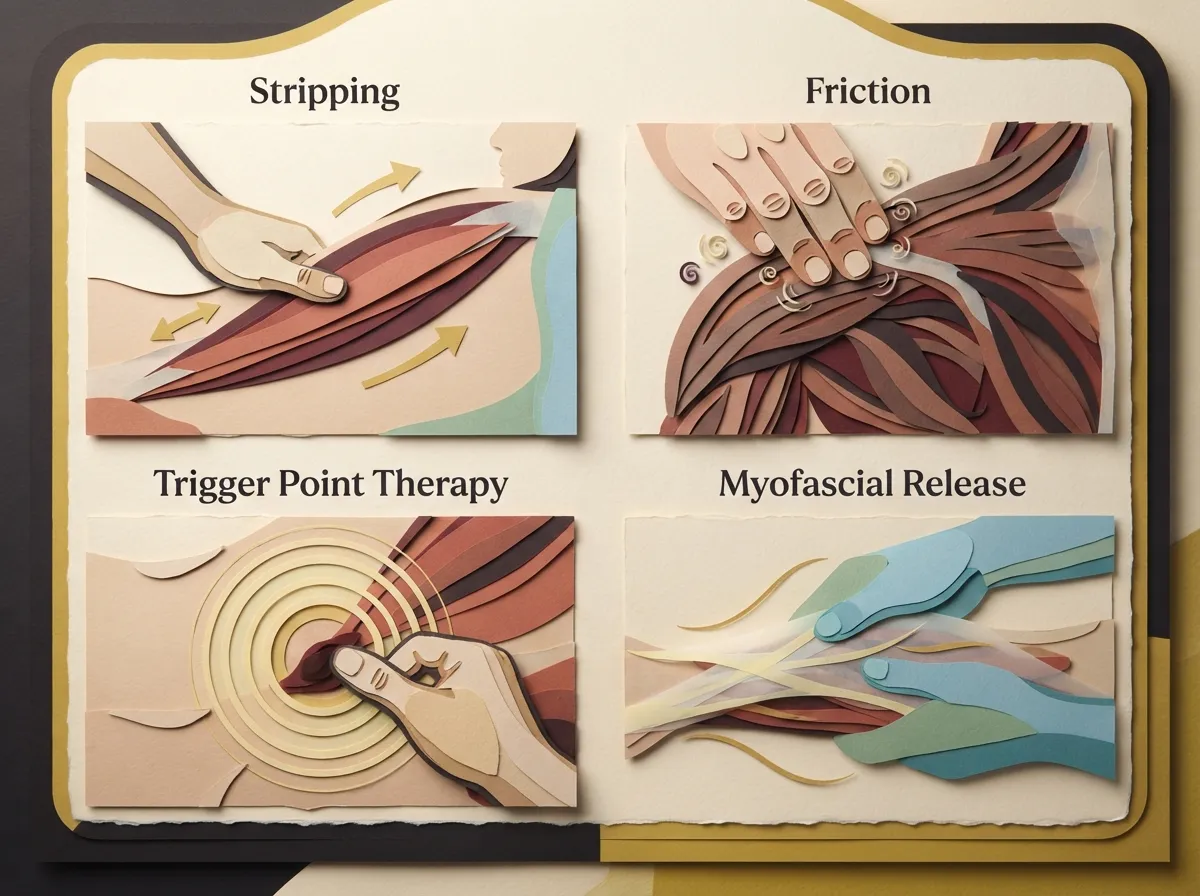
Most deep tissue sessions blend several methods. Therapists pick and combine them based on what they feel in your muscles and what you tell them. Here are the techniques you are most likely to experience.
Slow, Sustained Pressure
The therapist applies steady pressure to one spot and holds it, letting the tissue soften over time. Think of it like gently pressing into a stiff piece of clay until it starts to give. This is popular for tight upper traps, glutes, and calves.
Oblique Pressure
Instead of pressing straight down, the therapist angles the pressure. This lets them reach deeper layers without crushing the tissue against bone. Many clients find angled pressure feels more comfortable than direct, straight-down pressure.
Lengthening Strokes
These are long, slow glides along the length of a muscle. They encourage tight fibers to relax and can feel wonderfully smoothing, especially along the back and hamstrings.
Cross-Fiber Work
Here the therapist moves across the direction of the muscle fibers instead of along them. This technique targets stuck or knotted areas. It is often used on spots that feel “ropey” or tight around the shoulder blades and lower back.
Anchoring and Stretching
The therapist holds one part of the tissue in place (the anchor) while you or they gently move the nearby area. This combination helps release tension while improving how freely a joint moves. Athletes often love this one after training.
Here is a quick comparison of the main approaches:
| Technique | How It Feels | Common Areas | Best For |
|---|---|---|---|
| Slow, sustained pressure | Steady, melting pressure | Shoulders, glutes, calves | Stubborn tight spots |
| Oblique pressure | Angled, deep but comfortable | Back, hips, neck | Reaching deeper layers gently |
| Lengthening strokes | Long, slow glides | Back, legs, forearms | General tightness |
| Cross-fiber work | Focused, targeted | Shoulder blades, low back | Knotted or ropey areas |
| Anchoring and stretching | Pressure plus gentle movement | Shoulders, hips, hamstrings | Limited range of motion |
How Does Deep Tissue Differ From Swedish Massage?
Swedish massage uses lighter, flowing strokes meant to relax your whole body. Deep tissue is more focused and slower, often concentrating on specific problem areas. Both can be wonderful, and they serve different needs.
- Swedish: Great for general relaxation, stress relief, and first-timers.
- Deep tissue: Great for targeted tension, tight muscles, and movement limits.
- Blending both: Many sessions start gentle and go deeper where needed.
Not sure which fits you? Our guide to deep tissue vs. Swedish massage can help you decide. You can also read about what makes Swedish massage so loved.
What a Good Session Looks Like, Step by Step
Knowing what to expect takes the nerves out of your first visit. Here is how a thoughtful deep tissue session usually flows.
- Health history chat. Your therapist asks about injuries, medications, health conditions, and past surgeries.
- Goals and preferences. You share where you hold tension and how much pressure you like.
- Informed consent. The therapist explains what they plan to do, and you agree before starting.
- Warm-up. Lighter strokes prepare the muscles so deeper work feels easier.
- Deeper work. The therapist uses techniques like sustained pressure and cross-fiber work on target areas.
- Check-ins. Pressure is adjusted as you go, based on your feedback.
- Cool-down and aftercare tips. The session ends with gentler strokes and advice like drinking water and light stretching.
If you want a closer look at what comes with a full session, see our post on how to find and book a full-body deep tissue massage near you.
Should Deep Tissue Massage Hurt?
Short answer: no, not in a sharp or scary way. You may feel a deep pressure that is intense but tolerable, sometimes called “good pain.” That is very different from pain that makes you tense up or hold your breath.
Speak up right away if you feel any of the following:
- Sharp, stabbing, or burning pain
- Numbness or tingling that spreads
- Pain that keeps climbing as pressure continues
- Any feeling that makes you clench or brace
A great therapist wants that feedback. Pressure should be adjusted or stopped when you feel those sensations. Open communication is one of the most important parts of safe deep tissue work.
What Does the Research Say About Results?
Let’s be honest and balanced here. Deep tissue massage may help some people, but the evidence is mixed and often limited by small studies. Here are a few findings worth knowing.
- Neck pain: The Stockholm Neck (STONE) trial followed 619 adults with ongoing disabling neck pain. Massage groups showed more short-term pain improvement than advice at some follow-ups. By 12 months, none of the therapies beat advice for pain intensity or pain-related disability.
- Myofascial pain: A 2023 study of 80 people with myofascial pain syndrome found greater improvement when deep tissue massage was added to a standard rehab program. The sample was small, so results should be read with care.
- Older adults with low-back pain: A 2012 study of 26 adults aged 60 to 75 found both massage groups improved, with the deep tissue group doing better on some measures. Again, the group was small and follow-up was short.
- Pain during stretching: A 2008 experimental study reported that deep massage reduced pain during muscle stretch by 48.4% in its lab setting. That was an experimental pain model, not a promise for every client.
The takeaway? Many people feel better after a session, especially in the short term. But deep tissue massage is not a guaranteed cure, and it does not replace medical care. If you have ongoing pain, it is smart to check in with a healthcare provider too. To learn more, browse our pain relief massage truths backed by science.
Who Should Be Careful or Check With a Doctor First?
Deep tissue work is not right for every body on every day. A few rare but serious problems have been linked to forceful massage in the research, which is why screening matters so much.
Talk with a healthcare professional before booking if you have:
- A condition or medication that raises bleeding or bruising risk
- Bone fragility or a higher fracture risk
- Reduced sensation in an area
- Acute inflammation or significant swelling
- Recent trauma, injury, or surgery
- A serious underlying condition you are still sorting out
Therapists also avoid direct pressure over open wounds, bruises or hematomas, unstable fractures, burns, and other vulnerable areas. If you are expecting, a gentler approach is usually better. Read prenatal massage vs. regular massage to see why specialized care matters during pregnancy.
How Deep Tissue Techniques Fit Different Lifestyles
For Busy Professionals
Long hours at a desk or on calls can lock up your neck, shoulders, and upper back. Cross-fiber work and sustained pressure around the shoulder blades often feel like a pressure valve. Many Falls Church professionals book after work or on weekends to unwind. Our guide on relieving shoulder tension with massage therapy has more ideas.
For Athletes and Active Adults
If you run, lift, or train hard, lengthening strokes and anchoring-and-stretching can help tight hips, quads, and calves feel looser. A sport massage often blends these methods with a focus on recovery and movement. You can also read sports massage therapy benefits and techniques.
For Seniors with Stiffness
Older adults often do best with moderate pressure and slower pacing, with extra attention to comfort and screening. Gentle lengthening strokes and warm-up work can ease stiffness without overdoing it. Always share your health history and medications with your therapist first.
For Wellness-Focused Folks
If regular self-care is part of your routine, deep tissue can be a smart way to check in on stubborn areas. Many people pair it with Reiki healing for a calming mind-and-body combination.
Can Add-Ons Boost Your Deep Tissue Session?
Some clients like to pair deep work with extras. At Luna Massage Studio, you can add 15 minutes of cupping or Gua Sha to a massage for $35 each. Aromatherapy is also free and can be added to any massage on request. Our add-ons page explains each option.
How Often Should You Get Deep Tissue Massage?
There is no single perfect schedule. Some people go every few weeks during a stressful season or heavy training block. Others book monthly to stay ahead of tension. How your body feels afterward is a great guide.
Keep these tips in mind:
- Start with one session and notice how you feel over the next two days.
- Increase frequency if you feel better and recover well.
- Back off if you feel overly sore or drained.
- Tell your therapist how you responded so they can tune the next session.
For more help finding your rhythm, check out common massage frequency mistakes.
What to Expect After Your Session
It is normal to feel relaxed, a bit loose, or mildly sore, a lot like a good workout. A little tenderness can last a day or two. Sharp pain, unusual swelling, or bruising that worries you is worth mentioning to your therapist or doctor.
- Drink water and eat something nourishing.
- Take it easy for the rest of the day if you can.
- Try gentle stretching or a short walk.
- Use a warm shower or compress if soreness shows up.
Choosing a Therapist You Can Trust
Technique matters, but so does the person using it. Look for a licensed therapist who asks good questions, explains what they are doing, and checks in on pressure. You can read our tips on choosing a professional massage therapist you trust. You can also see what clients say through our reviews page, or visit us on Google — Luna Massage Studio to read feedback from people in the Falls Church area.
Curious about how rates work? Our post on deep tissue massage price factors breaks it down. At Luna Massage Studio, a deep tissue massage is $125 for 60 minutes, $145 for 75 minutes, or $165 for 90 minutes.
Ready to Feel the Difference?
The best deep tissue massage techniques are slow, thoughtful, and tuned to you. You do not need to grit your teeth or chase the hardest pressure. You just need a skilled therapist, clear communication, and realistic expectations.
If tight shoulders, a stiff back, or sore legs are slowing you down in 2026, we would love to help. Book your deep tissue session now, or contact our team with any questions, or call us at 703-254-0422. We cannot wait to meet you.
FAQs
Q: What is deep tissue massage, and how is it different from Swedish massage?
A: Deep tissue massage focuses on deeper layers of muscle and connective tissue using slow, controlled pressure, while Swedish uses lighter, flowing strokes for overall relaxation. Many sessions blend both, starting gentle and going deeper where you need it.
Q: Should deep tissue massage hurt?
A: It should feel deep and intense at times, but never sharp, burning, or scary. If you feel numbness, escalating pain, or tension that makes you brace, tell your therapist right away so the pressure can be adjusted or stopped.
Q: Who should avoid deep tissue massage or check with a doctor first?
A: Check with a healthcare professional first if you have bleeding or fracture risks, reduced sensation, acute inflammation, significant swelling, or recent trauma or surgery. Therapists also avoid direct pressure over open wounds, bruises, burns, and unstable fractures.
Q: How often should I get a deep tissue massage?
A: There is no single schedule that fits everyone. Many people start with one session, see how they feel for a couple of days, then book every few weeks or monthly based on their goals and how their body responds.
Q: Can deep tissue massage help with neck or lower-back pain?
A: Research suggests some people feel short-term pain or mobility improvements, though studies are small and results are mixed over the long term. It can be a helpful part of your care, but it is not a guaranteed fix or a substitute for medical evaluation.
Our Service Area